Ramsey Makhlouf has been around cars for as long as he can remember - starting at around ten years old, turning wrenches and screwdrivers alongside his father on the family cars. That early hands-on experience sparked a lifelong passion that has shaped his entire career.
At sixteen, with a new California Driver’s License in his pocket, Ramsey saved up enough money to buy a 1963 Volkswagen Beetle that didn't start. It was a bargain. He had it started and running in short order. His first after-school job was at a local Volkswagen specialty parts store. With the money he earned there, he bought the necessary parts and fully restored that ’63 Beetle.
Ramsey's love for Volkswagens led him into the Parts Department at a Volkswagen dealership while he was still in high school. After graduating, he continued with the dealership full time now, expanding his experience as a Service Advisor, a Car Salesman, and eventually moving into management positions at that dealership and others within the same auto group.
Ramsey eventually left the dealership world to carve his own path - owning and operating independent auto repair shops, since 2014, where he could bring his knowledge, automotive and customer-service skills, and passion directly to the community.
Throughout his life, Ramsey has personally restored several classic Volkswagens and a 1963 Corvette. His current personal restoration project is another American classic: a 1968 Big Block Corvette. His lifelong dedication to the automotive world continues to drive him as strongly today as it did when he first picked up those tools with his father.
Classic cars are treasures of automotive history, embodying elegance, style, and a bygone era’s engineering marvels. The definition of a classic car can vary widely, depending on who you ask.
Generally, many people consider any vehicle older than 25 years to be a classic. However, more stringent definitions exist. For example, the Classic Car Club of America defines a classic car as any fine or distinctive automobile built between 1915 and 1948. Other organizations, like the National Corvette Restorers Society, judge Corvette model years 1953 to 2004 for Flight Awards. Essentially, one may deem any distinctive and older car a classic. Some even consider newer models as future classics based on their unique characteristics and potential for collectible status.
From a mechanical perspective, Temecula Auto Repair views classic cars as those with non-computerized systems, relying more on mechanical devices than electronics. These vehicles require special care, including considerations for the type of gasoline used. Some enthusiasts prefer leaded gas, which is scarce and mostly found at airports or racetracks. Additionally, many classic cars spend considerable time in storage. To preserve the engine, it’s recommended to use oil that contains zinc.
Common Issues in Classic Cars
Classic cars often face unique challenges. One common problem is the deterioration of materials. Cars that have been sitting for extended periods may experience issues with rubber components, such as seals on windows or, more critically, engine gaskets. These can dry up and cause oil leaks, which are notoriously difficult to fix. Metal components, including brakes and water pumps, can also rust over time. Preventing deterioration of the parts will lead to a lot of savings down the line.
Parts Availability and Repair Challenges
Repairing classic cars can be challenging due to parts availability. Popular models like Chevys, Fords, Mustangs, and Corvettes generally have abundant parts available, whether original or good reproductions. However, rarer models, such as older Mercedes-Benz vehicles, may require more time to source parts.
Repairing these vehicles also involves precise adjustments, often guided by manuals and specifications. Here at Temecula Auto Repair, we have an extensive library of information, allowing our experts to make accurate adjustments and keep classic cars running smoothly.
Maintenance: Key to Longevity
Maintenance is crucial for any vehicle, and classic cars are no exception. Historically, classic cars required more frequent maintenance, such as oil changes every 3,000 miles. When storing a classic car and not driving it often, it’s essential to change fluids based on time rather than mileage.
For example, we recommend oil changes every 6 to 9 months, and coolant should be replaced every two years to prevent corrosion. Regularly starting and driving the car, even if only around the block, can help circulate vital fluids and prevent issues like rusty brakes and out-of-tune engines.
Repairing and Restoring Classic Cars
The approach to repairing or restoring a classic car depends on the owner’s intentions. Some may seek minor repairs for a driver vehicle, while others may desire a full restoration. Temecula Auto Repair begins by understanding the owner’s goals. For instance, a 1965 Corvette in our shop was undergoing a full restoration, including addressing rust issues in the seat frames and reupholstering them. Whether it’s a minor repair or a complete overhaul, our team tailors the services to fit each customer’s needs.
Recent Projects: Success Stories
Temecula Auto Repair has worked on numerous classic cars, each with its own story. A 1967 L71 Big Block Corvette came to us not running. The team rebuilt the carburetors, changed all fluids, and prepared it for auction, resulting in a successful sale. A 1969 Pontiac Firebird, used occasionally by its owner, was fine-tuned to run flawlessly, bringing immense satisfaction to the owner. Another memorable project involved a 1958 Pontiac Bonneville with a transmission issue. The transmission was rebuilt, and additional repairs were made, leaving the owner thrilled with the car’s performance.
Originality vs. Modification
Deciding between restoring a car to its original state or modifying it depends on various factors, including the car’s current condition and the owner’s preferences. Originality can preserve the car’s value, especially if it’s a numbers-matching model.
On the other hand, modifications can modernize the car, making it safer and more enjoyable to drive. Disc brakes, for example, offer improved performance over drum brakes. Temecula Auto Repair provides expert advice, helping customers make informed decisions while respecting the customer’s preferences.
Expertise and Passion
The staff at Temecula Auto Repair are not only experts but also passionate enthusiasts of classic cars. With years of experience and a deep understanding of these vehicles, we offer unparalleled service. Our extensive knowledge, coupled with access to original equipment manufacturer (OEM) parts and detailed manuals, ensures that every classic car receives the best possible care. Our library of resources includes service manuals and judging guides, which are invaluable for maintaining the originality and performance of classic cars.
Comprehensive Services
Temecula Auto Repair offers a full range of services for classic cars, from routine maintenance and minor repairs to full restorations. We understand that no two cars or customers are alike, and we tailor our services to meet individual needs. Whether it’s a quick fix or a comprehensive restoration, our team is equipped to handle any challenge.
Classic Car Auto Repair With Temecula Auto Repair & Transmission
If a classic car requires maintenance, repair, or restoration, Temecula Auto Repair is the ideal destination. With a team of passionate experts and a wealth of resources, we ensure that each vehicle receives the meticulous care it deserves. Temecula Auto Repair offers a range of services tailored to meet individual needs, whether it’s routine maintenance, intricate repairs, or full restorations.
Our dedication to preserving the originality and performance of classic cars is unmatched, and our commitment to customer satisfaction is evident in every project we undertake. For inquiries or to schedule an appointment, classic car owners can call (951) 699-3332. Temecula Auto Repair stands ready to help maintain and enhance the timeless beauty and functionality of classic vehicles, ensuring they remain roadworthy and cherished for years to come.
At Temecula Auto Repair and Transmission in the heart of Temecula and Murrieta, you can rely on comprehensive automotive services, from routine maintenance to major repairs. Today, let’s delve into your car’s radiator and some cooling system maintenance to ensure you preserve your engine for a long time and avoid overheating it.
What is a Radiator?
A radiator, as the name suggests, radiates heat. In the context of a car, the radiator’s role is to radiate heat away from the engine. It is crucial for the engine to run cool, and that’s the radiator’s job. Coolant, a liquid mixture of water and a special chemical called antifreeze, flows through your engine, picks up heat, and then flows into the radiator. The radiator’s job is to remove that heat from the coolant, thereby cooling the engine.
Components of Your Car’s Radiator
The main part of the radiator is the core, the metal center part you can see if you look at a radiator. The core contains coils through which the coolant flows and fins through which air flows, dissipating the heat from the engine. That’s essentially how the radiator works.
Additional Parts of Your Car’s Radiator
The radiator also includes tanks mounted to the sides of the core and a pressure cap, commonly known as the radiator cap. The radiator cap is usually on top of the radiator. Depending on the model, there might be an expansion tank with the cap on the expansion tank.
Handling Your Car’s Radiator Cap
A quick word of caution regarding the radiator cap: ensure the engine is completely cooled down before removing the radiator cap. Most caps have a warning not to remove or loosen them while the engine is hot. Please heed this warning to avoid injury.
The Role of Radiator Tanks
The radiator has an inlet tank where the coolant enters the radiator and an outlet tank where the cooled coolant exits. The coolant comes into the radiator through the upper radiator hose and exits through the lower radiator hose back into the engine. These hoses are rubber and flexible, but they deteriorate over time, so keep an eye on them.
Common Radiator Failures
Some of the most common radiator failures include leaks, typically caused by corrosion or separation of the tanks from the core. For maintenance purposes, you want to prevent this corrosion.
Regular Coolant Flushes
Regular coolant flushes are crucial. It’s recommended to flush the cooling system every two years or 30,000 miles, or according to your owner’s manual. Over time, the coolant breaks down, becoming more water than coolant, which promotes corrosion. Flushing and renewing the coolant prevents this.
Cooling System Hose Maintenance
The rubber hoses in the cooling system deteriorate over time, often from the inside out, and may burst open, causing a coolant leak. If the hoses appear old and weak, replacing them as a preventive measure is wise.
Radiator Replacement and Repair
If your radiator leaks or has corrosion, it might need repair or replacement. Most modern vehicles have radiators with plastic tanks, which usually cannot be repaired. In the past, radiators were all metal and could be soldered, but today, with plastic tanks, replacement is often the only option.
Avoid Stop Leak Products
While some products claim to stop leaks, such as stop-leak products, they can damage the engine by causing blockages in the cooling system, leading to overheating. At Temecula Auto Repair and Transmission, skilled technicians handle all radiator repairs and replacements, ensuring quality parts that meet or exceed the manufacturer’s standards are used.
Importance of Using the Correct Coolant
One crucial aspect of the replacement process, adhered to by professionals at Temecula Auto Repair and Transmission, is using the proper type of coolant as prescribed for your vehicle. Various types of coolants are available on the market, and they are vehicle-specific. It’s essential to use the correct coolant or antifreeze to avoid potential damage.
Check Your Car’s Radiator With Temecula Auto Repair & Transmission
With summer approaching, it’s an excellent time to bring your vehicle to the shop for a comprehensive check-up on your car’s radiator, including the cooling system. Ensuring your cooling system is in top condition is crucial for taking that planned road trip without any problems.
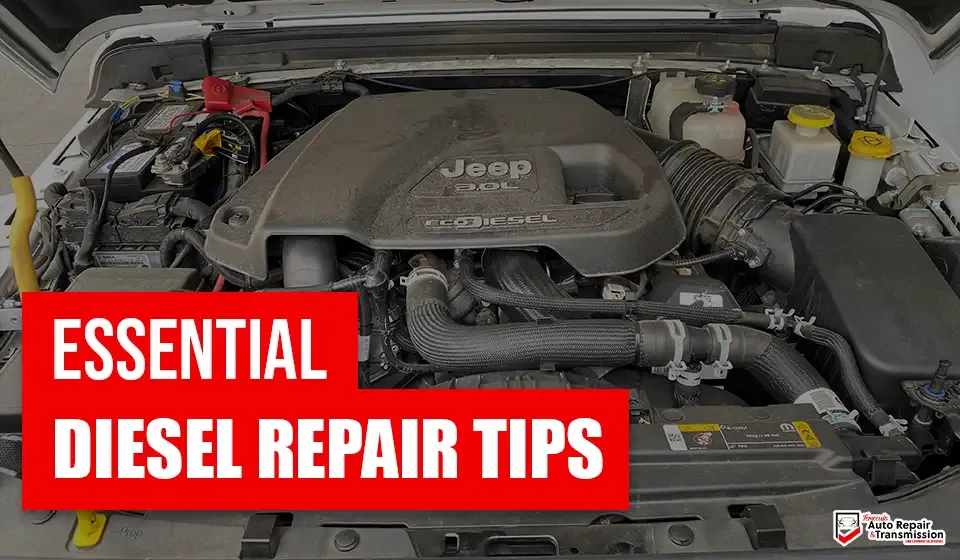
Hello everyone. Ramsey here from Temecula Auto Repair & Transmission. Today, I’m here to talk to you about diesel repair — specifically diesel vehicles and diesel engines. We’ll cover the differences between diesel and gasoline, some of the common problems and failures we see in diesel engines, maintenance on diesels, and things you can do to prolong the life of your diesel.
Diesel vs Gasoline Engines
Diesel engines as well as gasoline engines are both internal combustion engines. They both burn fuel for energy. Fuel is literally exploded in the cylinders in order to produce energy.
The main difference between gasoline and diesel, or what you will find in a diesel engine, is that the diesel engine compresses air first and then injects the fuel into the cylinders to burn it off. That air, as it is compressed, turns very, very hot. And when the fuel is injected into that diesel engine, it explodes, burning off and essentially producing energy. Proper diesel repair ensures that this process continues efficiently.
Why People Choose Diesel Engines
The main reason some of our customers prefer diesel engines over gasoline is that they’re more efficient. Diesel fuel is denser and thicker than gasoline, producing more energy. Diesel engines also tend to run a lot longer, providing better longevity and a longer life.
Diesel engines are typically more reliable. There’s also the issue of power and torque. Diesel engines tend to have more torque and are much better for towing. So, the bigger trucks you see, like pickup trucks (which we service), that are used for towing—there’s a reason for that. Diesel engines produce more torque and are much better for towing, which is why our customers prefer them. To maintain these benefits, diesel repair is essential.
Diesel Engine Problems
When it comes to diesel repair, understanding the common engine problems and failures is crucial. Diesel engines are robust and durable, but like any mechanical system, they can encounter issues.
Cooling System Failure
Cooling system failures are typically seen when the engine is pushed too hard and overheats, eventually and ultimately causing engine damage. So it’s key to maintain your cooling system in a diesel.
Fuel Contamination
Some other issues we will see in diesel engines are fuel contamination or fuel failures of some kind. Fuel system failures, namely injectors, carb up and stop working as efficiently as they should.
Fuel system maintenance is also key. Water inside the diesel fuel is also a huge, huge problem. It’s very, very important that the fuel filters and the water separators are maintained and replaced frequently enough to prevent fuel system failures in your diesel engine. Proper diesel repair can help identify and address these issues.
You don’t want contaminated fuel or a contaminated fuel system, so maintenance is key. Those fuel filters and water separators that are part of the fuel filter need to be replaced pursuant to the manufacturer’s recommendations.
Fuel Injector Problems
Sometimes the common signs of some failures in the diesel engine or the fuel system include seeing smoke coming out of the exhaust, excessive smoke, or excessive black smoke. That could be an indication of a problem in the engine, whether it’s carbon buildup, fuel injector problems, or fuel system issues. It’s very, very important that once you start seeing signs—telltale signs of failure—that you get into the shop right away and have us take a look to see what is causing it. Proper diesel repair is essential to avoid further damage.
Lack of Maintenance
As with most vehicles, maintenance is key—and even more so with diesels. Make sure you’re changing the oil frequently enough to avoid engine problems. The air filter and fuel filter should also be replaced per the manufacturer’s specifications. You don’t want to go too long outside of the interval without replacing those filters, especially the fuel filter. Regular diesel repair and maintenance are essential to keep your engine running smoothly.
EGR Valves
Some diesel engines are equipped with EGR valves. Over time, these valves can become clogged with carbon. So, it’s crucial to maintain the EGR valves, clean out carbon buildup, and prevent issues. Some symptoms of plugged or carbon-clogged EGR valves include loss of power and overall poor performance from your diesel engine. Regular diesel repair and maintenance can help avoid these problems and keep your engine running efficiently.
Diesel Repair Around the Corner
Here at Temecula Auto Repair & Transmission, we are a full service diesel shop. We do all repair and maintenance on diesels anywhere from major repairs like engines. The vehicle behind me right here is in need of an engine, and we diagnose that and determined it. And, it is in the process of having an engine replaced. as to maintenance, we do again do all maintenance services.
We Do Everything for Diesels
As I recommended, fuel filters, oil changes, air filters, turbocharger replacements and or rebuilds, we, we will take care of the particulate filter is something you also want to make sure you maintain those do get clogged at some point or start to build up with a lot of the soot from the exhaust. removing those and cleaning them out periodically is a great idea.
And that is also something we do. So again, full bumper to bumper maintenance on diesel vehicles is something you can expect here at to make a lot of repair and transmission
Our team here at Temecula Auto Repair & Transmission is highly skilled and trained in diesel repair and maintenance.
We are AC certified, including AC certified in diesel. We are also a smog shop and we do smog inspection, smog checks on diesels. And if there is a problem with that smog check, we can take care of it. We are a one stop shop when it comes to that.
I urge you to properly maintain your diesel engine. That is key. If you do see any sort of problems out on the road – black smoke, poor running, lack of power or anything of that nature – it’s imperative that you bring it in to us right away so we can address this issue before there’s additional damage.
When selecting the right vehicle for a teenager or college student, the decision involves more than just choosing a car off the lot. It’s about finding a balance between safety, features, reliability, affordability, and the unique personality of the young driver. In this article, we’ll discuss some of the best used car options. We’ll blend these essential factors to help families and young adults make an informed choice.
Emphasizing Safety
The biggest concern for any parent or guardian when choosing a car for their teen or college-aged child is safety. The roads can be unpredictable, and young, less experienced drivers need all the help they can get. Cars equipped with top-notch safety features such as advanced airbag systems, anti-lock braking systems (ABS), electronic stability control (ESC), and rearview cameras can significantly reduce the risk of accidents. Vehicles that have earned high safety ratings from reputable organizations offer an extra layer of confidence. It’s not just about having these features but it’s about the peace of mind they bring, knowing your loved one is in a car designed to protect them.
Prioritizing Reliability
Reliability is a critical factor in choosing a car for someone who might be living away from home for the first time or balancing school and part-time work. A reliable car means fewer unexpected breakdowns, lower maintenance costs, and more time on the road. It’s about knowing that the vehicle is as ready for a spontaneous road trip as it is for the daily commute. Dealerships like Tom Roush Mitsubishi understand this and often have a selection of cars known for their endurance and reliability.
Considering Affordability
The financial aspect of purchasing a car, especially for teens and college students, cannot be ignored. It’s often about finding the best value, a car that offers the most without breaking the bank. This includes not only the purchase price, but also fuel efficiency, insurance costs, and upkeep. Used cars present a fantastic opportunity to own a vehicle that might have been out of reach if purchased new, without sacrificing quality or essential features.
Choosing the Right Vehicle
Through the years, certain models have proven themselves to be affordable, safe, and reliable. Here are just a few examples:
Honda Civic –
The Honda Civic isn’t just a car; it’s a companion for the road ahead. Its reputation for reliability isn’t by chance. It’s the result of years of engineering excellence. Beyond its efficiency and durability, the Civic offers a refined interior with ample space for passengers and cargo alike. The Civic’s commitment to safety through advanced driver assistance technologies makes it a standout choice for families prioritizing the well-being of their young drivers.
Toyota Corolla –
The Toyota Corolla has long been known for longevity. This compact sedan is more than just a vehicle; it’s a gateway to independence for young drivers, with its intuitive controls, comfortable seating, and a reputation for minimal visits to the repair shop. The Corolla is an ideal candidate for those seeking a worry-free driving experience. Its fuel efficiency is the cherry on top, making it perfect for college students mindful of their budget.
Mazda 3 –
The Mazda 3 breaks the mold of the typical compact car by offering an engaging driving experience paired with a sleek, sophisticated design. It’s for the young driver who values aesthetics and performance equally. With its responsive handling and upscale cabin, the Mazda 3 delivers a sense of luxury without the hefty price tag. Safety features are comprehensive, ensuring that fun behind the wheel doesn’t compromise security.
Hyundai Elantra –
The Hyundai Elantra stands out with its modern design and an impressive suite of tech features that resonate with the tech-savvy younger generation. Its spacious interior offers comfort for long drives, while the advanced safety systems provide a buffer against unforeseen road challenges. The Elantra is proof that economical choices can also bring style and substance to the table.
Subaru Impreza –
For those facing the challenges of inclement weather, the Subaru Impreza offers standard all-wheel drive. This feature, rare in its class, provides enhanced traction and control, making it a reliable companion for adventurous drivers facing snowy campuses or rainy commutes. The Impreza doesn’t skimp on safety or interior quality, making it a well-rounded choice for any young driver.
Conclusion
Choosing the right car for a teen or college student is a task that involves considering various factors, from safety and reliability to cost-effectiveness. It’s about finding a vehicle that not only serves practical needs but also aligns with the young drivers’ lifestyles and aspirations. For families and students faced with this decision, partnering with a trusted dealership like Tom Roush Mitsubishi can help you find the perfect used car, ensuring a choice that brings satisfaction and security for many years.
Frequently Asked Questions
What is the best first car for a 16 year old?
Strong picks are the Honda Civic, Toyota Corolla, and Mazda 3. They earn high safety ratings, cost little to repair, and are known for reliability, which is what a new driver needs.
What are the most reliable cars for teens?
The Toyota Corolla, Honda Civic, and Subaru Impreza are among the most reliable, routinely running well past 150,000 miles with basic maintenance.
What are good first cars for 17 year olds?
The same shortlist works, and a slightly higher trim is fine for a 17 year old with a bit more experience.
What are the best used cars for teenagers under $10k?
The recommended models are often available in good condition under $10k. Before buying, have the car inspected for service history, brakes, tires, and leaks.
Are these cars good for college students?
Yes. Their fuel economy, low maintenance cost, and reliability make them ideal for commuting students.
Understanding the Importance of Regular Diesel Engine Maintenance
When it comes to maintaining your diesel engine, regular maintenance is not just important, it’s crucial. Diesel engines are known for their durability and long lifespan, but without proper care and upkeep, even the most reliable engines can suffer from issues that affect performance. Regular diesel engine maintenance and repair plays a pivotal role in ensuring optimal performance and longevity of your truck’s diesel engine.
Here are a few reasons why maintenance should never be overlooked.
Enhanced Performance:
Routine maintenance keeps your engine operating at its best. Regular oil changes, fuel filter replacements, and air filter cleanings or replacements help maintain proper lubrication and ensure clean combustion. This results in improved fuel efficiency, smoother operation, and consistent power output.
Increased Reliability:
A well-maintained diesel engine is more likely to start easily and run smoothly without unexpected breakdowns or malfunctions. By following the truck manufacturer’s recommended maintenance schedule, you can minimize the risk of costly repairs due to neglected upkeep.
Extended Engine Life:
When you invest in a high-quality diesel pickup truck like Dodge/Ram – Cummins, Ford – Power Stroke, and General Motors – Duramax, it makes sense to protect that investment by providing proper care through regular maintenance. By addressing minor issues before they become major problems, you can extend the life of your engine significantly.
Safety Assurance:
Neglecting routine maintenance may lead to compromised safety on the road or job site if unexpected breakdowns occur during critical operations. Regular inspections allow technicians to identify potential hazards or faulty components before they cause failures.
Warranty Compliance:
Following the recommended maintenance schedule helps ensure that your warranty remains valid throughout its duration. Failing to adhere to these guidelines may void certain warranty coverage options provided by your truck’s manufacturer.
Diesel Engine Maintenance
Investing time and effort into regular diesel engine maintenance should never be underestimated when it comes to optimizing performance and reliability while extending the life of your valuable Cummins, Power Stroke, or Duramax diesel engine.
Ensure the longevity and optimal performance of your diesel engine with this comprehensive maintenance checklist. Regularly following these steps will help you avoid costly repairs and keep your engine running smoothly:
Oil Change:
Regularly change the oil according to the manufacturer’s recommendations, typically every 3,000 to 5,000 miles. Clean oil ensures proper lubrication and protects against wear and tear.
Fuel Filter Replacement:
Replace the fuel filter based on the manufacturer’s guidelines or whenever you notice decreased performance or fuel efficiency. A clean fuel filter prevents contaminants from entering the engine.
Air Filter Replacement:
Replace the air filter regularly to maintain proper airflow and prevent dust or debris from entering the engine. A clogged air filter restricts air supply, leading to reduced power output.
Coolant System Flush:
Periodically flush out old coolant and replenish it with fresh coolant as recommended by your vehicle’s manual. This prevents overheating by regulating temperature levels in the engine.
Belt Inspection and Replacement:
Regularly inspect all belts for signs of wear, cracks, or fraying. Replace any damaged belts promptly to avoid sudden failures that could lead to more significant issues.
Remember that these are general guidelines. Always refer to your specific vehicle manual for accurate maintenance schedules tailored for your diesel engine model. By diligently following this maintenance checklist, you’ll ensure that your diesel engine runs efficiently while reducing potential breakdowns caused by neglecting routine upkeep tasks.
Tips and Tricks for Proper Diesel Engine Maintenance
Taking care of your diesel engine is crucial for its longevity and optimal performance. Here are some valuable tips to ensure its smooth operation:
Choose high-quality fuel and lubricants:
To keep your diesel engine running smoothly, it’s essential to use high-quality fuel and lubricants that meet the manufacturer’s specifications. Premium fuels with low sulfur content can help prevent deposits from building up in the combustion chamber.
Monitor oil levels regularly:
Regularly check your engine oil. Maintaining proper oil levels ensures that all components are adequately lubricated, minimizing friction and wear.
Regularly change the oil and filter:
Over time, engine oil accumulates contaminants that can negatively impact performance. Follow the manufacturer’s recommended intervals for changing both the oil and filter to maintain optimal operating conditions.
Maintain proper coolant levels and quality:
Adequate coolant levels are crucial for preventing overheating in a diesel engine. Check coolant levels regularly, ensuring they remain within the recommended range outlined in your vehicle manual. Additionally, periodically inspect the quality of your coolant by testing for pH balance and freeze point protection.
Perform regular diesel engine maintenance checks:
Periodically inspecting belts, hoses, filters, air intake systems, turbochargers (if applicable), and other key components is vital to detect any signs of wear or damage early on. Addressing these issues promptly can prevent more significant problems down the line.
Warm up before driving in extreme temperatures:
In colder climates or during winter months, allow your diesel engine sufficient warm-up time before driving off to avoid unnecessary strain on critical components.
Avoid excessive idling:
Prolonged periods of idling can cause carbon buildup inside a diesel engine’s combustion chambers and lead to decreased fuel efficiency over time.
Regular Inspections Are Crucial
Regular inspections play a crucial role in detecting potential issues early on, especially when it comes to engine inspections. By conducting routine examinations, you can identify common issues before they escalate into major problems that could lead to costly repairs or even engine failure. During these inspections, it is essential to be vigilant and look out for signs of wear or damage. This includes checking for any leaks, unusual noises, or vibrations coming from your truck’s diesel engine.
Additionally, paying attention to changes in performance such as reduced power output or decreased fuel efficiency can also provide valuable insights into potential issues. Identifying common issues early on is particularly important because many diesel engine problems start small and gradually worsen over time. By catching them at an early stage, you can address them promptly and prevent further damage.
Furthermore, regular inspections allow you to keep track of the overall condition of your engine components. This includes monitoring parts that are prone to wear and tear such as belts, hoses, filters, and spark plugs. By regularly inspecting these components for signs of deterioration or damage like cracks or fraying, you can replace them proactively before they cause more significant problems.
In summary, regular inspections are vital in detecting potential issues early on by closely examining your diesel engine’s performance and identifying signs of wear or damage. By being proactive in maintaining your engine’s health through routine examinations, you can avoid unexpected breakdowns and expensive repairs while ensuring optimal performance for years to come.
Remember, consulting your vehicle manual or seeking professional advice from our qualified staff is always recommended when dealing with specific maintenance tasks or concerns related to your diesel engine. By following these tips and practicing regular care, you’ll help ensure the longevity and reliability of your diesel engine.
Common Diesel Engine Problems and How to Troubleshoot Them
Dealing with a diesel engine issue can be frustrating, especially when it affects the performance and efficiency of your truck. However, armed with the right knowledge and a systematic approach, you can quickly diagnose and fix common problems such as overheating or excessive smoke emission.
In this troubleshooting guide, we will provide you with step-by-step instructions to identify these issues and offer practical solutions to get your diesel engine running smoothly again.
Overheating:
Overheating is a common problem in diesel engines that can lead to severe damage if not addressed promptly. To diagnose an overheating issue, follow these steps.
a) Check coolant levels: Ensure that the coolant reservoir is filled to the appropriate level indicated by the manufacturer.
b) Inspect for leaks: Look for any visible signs of coolant leakage, such as puddles underneath the engine or wet spots on hoses.
c) Examine radiator fins: Clear away any debris obstructing airflow through the radiator fins.
d) Inspect water pump functionality: Verify that the water pump is operating correctly and circulating coolant effectively.
Excessive smoke emission from your diesel engine can indicate underlying problems that require attention. Here’s how you can troubleshoot this issue.
a) Determine smoke color: Different colors of smoke indicate different issues.
– Black smoke suggests an excessive fuel-to-air ratio caused by a clogged air filter or faulty injectors.
– Blue/Gray smoke indicates oil burning due to worn piston rings or valve seals.
– White smoke suggests unburned fuel caused by low compression or faulty injectors.
b) Inspect the air filter: Remove and inspect your air filter for dirt buildup or clogs; replace the air filter if necessary.
c) Check fuel injectors: Ensure proper fuel injector function and cleanliness. Dirty or faulty injectors may require cleaning or replacement.
If the issue persists, we invite you to come see our experts who can perform a more detailed inspection and provide appropriate solutions.
Get Your Diesel Engine Maintenance Needs With Temecula Auto Repair
Diesel engine troubleshooting requires a systematic approach to identify and address common issues such as overheating or excessive smoke emission. By following the steps outlined in this guide, you can diagnose these problems with confidence and take appropriate action to get your diesel truck back in top shape.
Investing in Proper Diesel Engine Maintenance and Repair for Longevity & Peek Performance
Investing in proper diesel engine maintenance and repair is not only a smart decision but also crucial for ensuring longevity and peak performance. The diesel engine in your pickup truck is known for its durability and reliability. However, like any other machinery, it requires regular upkeep to function at its best.
By taking proactive measures such as regular oil changes, filter replacements, and scheduled inspections, you can prevent major issues from arising in the first place. This preventive approach will save you both time and money in the long run by avoiding costly repairs or even engine replacements.
Moreover, investing in professional diesel maintenance and repair services ensures that your pickup’s diesel engine is handled by our experts who have an in-depth understanding of its workings. We possess the necessary knowledge and tools to diagnose potential problems early on and address them effectively.
Another benefit of proper maintenance is improved fuel efficiency. Regularly servicing your diesel engine helps optimize its performance by keeping all components clean and functioning optimally. This translates into better fuel economy that saves you money at the pump while reducing your carbon footprint.
Additionally, maintaining your diesel engine according to manufacturer guidelines enhances your truck’s resale value. When it comes time to sell or trade-in your vehicle, having a well-documented history of regular maintenance instills confidence in potential buyers or dealerships.
Investing in proper diesel engine maintenance and repair is an investment worth making. It guarantees longevity for your engine and your truck while ensuring it performs at its peak efficiency for years to come. So don’t overlook this essential aspect of ownership – take care of your truck’s diesel engine. Call Us or Book An Appointment today!
Check out our additional resources on Diesel Repair:
Exploring Automotive HVAC Components and Their Functions
Introduction to Automotive Air Conditioning
The Automotive Air Conditioning System, also known as the car AC system, plays a crucial role in providing a comfortable driving experience. It does so by regulating the vehicle’s climate control. Your car’s AC ensures that the interior temperature of the vehicle remains cool and comfortable, especially during hot summer months.
The car AC system consists of several components that work together to achieve optimal cooling performance. These components include the AC compressor, condenser, evaporator, expansion valve, and refrigerant.
The compressor is responsible for pressurizing and circulating the refrigerant throughout the system. The condenser then cools down the refrigerant by dissipating heat from it. The cooled refrigerant then flows into the evaporator. In the evaporator, the refrigerant absorbs heat from the interior of the vehicle, thereby cooling down the air. Finally, the expansion valve regulates theflow of refrigerant into the evaporator.
Apart from cooling down the air inside a vehicle’s cabin, modern car AC systems also help in dehumidifying and purifying the air. They remove excess moisture from inside. The AC system also filters out dust particles and allergens to provide a healthier environment for occupants.
Regular maintenance and servicing are essential to ensure optimal performance of an automotive air conditioning system. This includes checking refrigerant levels, inspecting for leaks or damage in components, cleaning or replacing cabin filters, and ensuring proper functioning of all controls.
Automotive air conditioning systems are integral to providing a comfortable driving experience by regulating climate control inside vehicles. Understanding how these systems work can help drivers appreciate their importance and take necessary steps to maintain them properly for long-lasting performance.
So, let’s dive into the various components that make up your car’s air conditioning system.
The Role of the Air Conditioning Compressor
The air conditioning compressor is a critical component of automotive air conditioning systems. It plays a crucial role in the refrigeration cycle by compressing the refrigerant, which is responsible for cooling and dehumidifying the air.
The AC compressor works by pressurizing the low-pressure refrigerant vapor, raising its temperature, and converting it into a high-pressure, high-temperature gas. This process increases the energy of the refrigerant, allowing it to release heat as it flows through the condenser.
The compressed refrigerant then moves to the condenser where it releases heat to the outside environment. This then causes the refrigerant to cool down and condense back into a liquid state. This cooled liquid then passes through an expansion valve or metering device that regulates its flow rate before entering the evaporator coils.
Inside the evaporator coils, the low-pressure liquid expands rapidly and evaporates into a gas again. This evaporation process absorbs heat from the interior air of the car, thus cooling and dehumidifying it. The now low-pressure gas returns to the compressor to start another cycle. Without a functioning air conditioning compressor, a vehicle’s AC system would not operate to effectively cool down the cabin.
It’s worth noting that regular maintenance of an AC compressor is crucial for ensuring its longevity and efficient operation. Routine inspections and cleaning can help prevent issues such as clogs or leaks that could potentially damage this vital component of an automotive air conditioning system. Click here to schedule your AC Maintenance Service today.
How Does the AC Compressor Work?
AC compressors play a crucial role in the operation of automotive air conditioning systems by facilitating the refrigerant compression process. Understanding how they work can help us appreciate their importance in providing cool air during hot summer months.
The AC compressor is in the engine compartment, typically driven by a belt. Its primary function is to compress and circulate the refrigerant, which is responsible for absorbing heat from the passenger cabin and transferring it outside. This compression process increases the pressure and temperature of the refrigerant, preparing it for efficient heat exchange.
The compressor consists of several key components, including a motor, pistons or scroll mechanisms, and valves. When activated, the motor drives the pistons or scrolls to create a suction force that draws in low-pressure refrigerant vapor from the evaporator coil. As this vapor enters the compressor, it gets compressed by reducing its volume while simultaneously increasing its pressure.
The compressed high-pressure refrigerant then moves to the condenser located in the front of the car, behind the front grill. Here, it releases heat as it condenses into a liquid state due to high pressure and temperature. The expelled heat is dissipated into the environment through metal fins.
Once cooled and condensed, the liquid refrigerant travels to an expansion valve. The expansion valve is a metering device that regulates its flow rate into an evaporator coil inside the dashboard. In this evaporator coil, low-pressure liquid refrigerant absorbs heat from inside the car as it evaporates back into a gas. This continuous cycle repeats for as long as cooling is required to reach the desired or set temperature for the vehicle’s interior.
Common Issues and Maintenance Tips for the AC Compressor
Like any mechanical component, the automotive AC compressor can encounter problems over time. Understanding these issues, troubleshooting them, and maintaining the efficiency of your AC compressor is essential for ensuring optimal cooling performance and prolonging its lifespan.
One common problem with AC compressors is insufficient cooling or no cooling at all. This could be due to low refrigerant levels, a faulty compressor clutch, or a blocked condenser. In such cases, it is recommended to check the refrigerant levels and recharge the system, if necessary, inspect the compressor clutch for any signs of damage or wear, and clean the condenser to remove any debris or dirt buildup.
Another issue that can arise with AC compressors is excessive noise during operation. This could indicate a problem with the motor bearings or worn-out components within the compressor itself. Regular AC system maintenance can help mitigate this issue.
AC compressors are also susceptible to electrical failures, which may result in intermittent cooling or complete system failure. This can occur due to faulty wiring or connections. It is crucial to have our experienced technician diagnose and repair electrical issues to prevent further damage.
To maintain the efficiency of your car’s AC compressor and prevent potential problems from arising, regular maintenance is key. This includes cleaning or replacing the cabin air filter regularly to ensure adequate airflow through the system and preventing dust accumulation on vital components. Additionally, scheduling annual professional inspections will allow our technicians to identify any potential issues before they escalate into major problems. Click here to schedule your AC Service.
Understanding common AC compressor problems, troubleshooting techniques for resolving these issues effectively as well as implementing proper maintenance practices are essential for keeping your AC system running efficiently and avoiding costly repairs or replacements in the long run.
The Function of the Air Conditioning Condenser
The air conditioning condenser is a crucial component in the automotive air conditioning system. Its main function is to dissipate heat generated during the air conditioning process.
When the car’s AC system is turned on, the refrigerant flows through the evaporator coil inside the car, absorbing heat from the cabin and cooling it down. The heated refrigerant then moves to the condenser unit located at the front of the vehicle.
The condenser unit consists of a series of thin metal tubes and fins that help transfer heat from the refrigerant to the outside air. As the outside air passes through these fins, it absorbs heat from the hot refrigerant, causing it to cool down and condense back into a liquid state.
This process of heat dissipation is essential for maintaining efficient cooling performance in a vehicle’s AC system. If there are any issues with the condenser unit, such as clogged or damaged fins or leaks in the tubing, it can lead to reduced cooling capacity or even complete failure of the AC system.
Regular maintenance and cleaning of the condenser unit are necessary to ensure its optimal functioning. Removing any debris or dirt that may accumulate on its surface helps improve airflow and enhances its ability to dissipate heat effectively.
In recent years, advancements in technology have led to improvements in automotive condensers. Manufacturers are now using more efficient designs and materials that enhance heat transfer capabilities while reducing overall size and weight.
Understanding how an air conditioning condenser works and its role in dissipating heat within AC systems is essential for both vehicle owners and technicians when troubleshooting cooling-related issues or considering maintenance measures for optimal performance.
Tips for Cleaning and Maintaining the Air Conditioning Condenser
Proper maintenance of your air conditioning system’s condenser is crucial for its optimal performance and longevity. One essential aspect of condenser maintenance is regularly cleaning the condenser fins and preventing debris buildup. Now, let’s explore effective techniques to clean condensers and keep the fins free from debris.
Condenser fins are thin metal strips that facilitate heat transfer in your car’s air conditioning system. Over time, these fins can accumulate dirt, dust, leaves, and other debris, obstructing airflow and reducing the efficiency of the condenser. Neglecting regular cleaning can lead to decreased cooling capacity, and potential damage to the air conditioning compressor.
Preventing Debris Buildup on AC Condenser Fins
To prevent debris buildup on condenser fins, follow these techniques:
Visual inspection: Visually inspect the condenser unit regularly. Look for any visible signs of debris accumulation such as leaves, or insects stuck between the fins.
Gentle brushing: Use a soft-bristle brush or a fin comb specifically designed for cleaning condensers. Gently brush or comb through the fins in an upward motion to remove loose debris without damaging them.
Compressed air: If there is significant dirt or dust buildup between the fins, you can use compressed air to blow away stubborn particles effectively. Be cautious not to apply excessive pressure directly onto the delicate fins.
Water spray: A gentle spray of water can help remove remaining dirt and grime from the fin surfaces. Use a garden hose with a spray nozzle attachment on low pressure setting to avoid bending or damaging the fins.
Regular maintenance schedule: Establish a routine maintenance schedule for cleaning the condenser fins, ideally at least once or twice a year, depending on the environment and driving conditions. This proactive approach can prevent excessive debris buildup and maintain the efficiency of your car’s air conditioning system.
By following these techniques, you can effectively clean condenser fins and prevent debris buildup. Regular maintenance ensures optimal performance of your air conditioning system and extends its lifespan.
The Importance of the Receiver-Dryer Unit in Automotive HVAC Systems
When it comes to automotive air conditioning systems, the receiver-dryer unit plays a crucial role in ensuring optimal performance. This component serves two important functions: receiver and dryer.
Firstly, as a receiver, this unit acts as a storage container for refrigerant. It receives the high-pressure liquid refrigerant from the condenser and stores it until it is needed by the evaporator. This process helps to maintain a steady flow of refrigerant throughout the system, ensuring efficient cooling.
Secondly, as a dryer, the receiver-dryer eliminates moisture and contaminants from the refrigerant. Moisture can be harmful to the air conditioning system as it can cause corrosion and freeze-ups. The receiver-dryer contains desiccants that absorb any moisture present in the refrigerant, preventing these issues from occurring.
In addition to moisture removal, the receiver-dryer also filters out any debris or contaminants that may have entered the system during normal operation or servicing. By trapping these particles before they reach other sensitive components like the AC compressor or expansion valve, it helps to protect them from potential damage.
The receiver-dryer unit plays a vital role in maintaining optimal performance and longevity of automotive air conditioning systems. It ensures proper refrigerant flow while effectively removing moisture and contaminants, contributing to efficient cooling and reliable operation of your vehicle’s AC system.
How To Recognize Signs of a Faulty Receiver-Dryer and When To Replace It?
The receiver-dryer is an essential component of the automotive air conditioning system. Its primary function is to filter and dry the refrigerant, ensuring efficient and reliable cooling performance. However, like any other automotive part, the receiver-dryer can develop issues over time.
One common problem with receiver-dryers is clogging. Due to its role in filtering contaminants from the refrigerant, it can become blocked with debris and moisture over time. This can restrict the flow of refrigerant and lead to reduced cooling capacity or even complete system failure.
Another issue that may arise is a damaged or leaking receiver-dryer. The seals or connections on the unit can wear out or become damaged, causing refrigerant leaks. This can result in poor cooling performance and potential damage to other components of the AC system.
When facing these issues, it is crucial to replace the receiver-dryer promptly. Replacement typically involves evacuating the AC system of refrigerant, disconnecting hoses and electrical connections, removing mounting brackets, installing a new unit, reattaching hoses and connections securely, evacuating air from the system using a vacuum pump, and finally recharging with proper refrigerant levels. If you suspect a receiver/dryer problem in your car, click here to set an appointment for our expert technicians to evaluate your AC system.
Understanding the Expansion Valve in Automotive Air Conditioning
Expansion valves play a crucial role in the thermal expansion process and regulation of air conditioning systems. In an automotive air conditioning system, the expansion valve serves as a control device that manages the flow of refrigerant into the evaporator coil.
During the thermal expansion process, the expansion valve ensures that the high-pressure, high-temperature refrigerant from the condenser is transformed into a low-pressure, low-temperature mixture before entering the evaporator coil. This transformation is essential for achieving effective cooling.
The expansion valve operates based on a simple principle: it creates a restriction in the refrigerant flow, causing a drop in pressure. As a result, the refrigerant expands and cools down significantly as it enters the evaporator coil. This cooling effect allows it to absorb heat from the vehicle interior and, thus, lower the interior’s temperature.
The regulation of an air conditioning system heavily relies on proper functioning of the expansion valve. By adjusting its opening or closing position, technicians can control how much refrigerant flows into the evaporator coil. This control enables precise temperature management and ensures optimal cooling performance.
Furthermore, modern air conditioning systems often employ electronic expansion valves (EEVs) that utilize advanced sensors and algorithms to regulate refrigerant flow more accurately. These EEVs can dynamically adjust their opening positions based on real-time data such as ambient temperature, humidity levels, and cooling demands. This level of sophistication enhances energy efficiency and overall system performance. Learn more about Electronic Expansion Valves here.
In summary, expansion valves are vital components in automotive air conditioning systems that facilitate the thermal expansion processes while regulating refrigerant flow. Their proper functioning is essential for achieving efficient cooling and maintaining optimal temperature conditions in the passenger cabin.
How Does an Automotive Expansion Valve Control Refrigerant Flow?
When the high-pressure, high-temperature refrigerant from the compressor enters the expansion valve, it undergoes a process known as throttling. The expansion valve reduces the pressure of the refrigerant by creating a restriction in its flow path. This restriction causes a drop in pressure while allowing only a small amount of refrigerant to pass through.
As the pressurized liquid refrigerant passes through the expansion valve, it enters the evaporator coil, usually housed in the dashboard. Here, due to reduced pressure, it undergoes a phase change from liquid to vapor. This phase change is accompanied by a significant decrease in temperature.
By regulating both pressure and temperature, the expansion valve ensures that only an optimal amount of refrigerant enters the evaporator coil. This helps maintain efficient heat transfer between the vehicle interior and the refrigerant inside the evaporator.
Troubleshooting Common Automotive Expansion Valve Problems
Diagnosing and fixing expansion valve malfunctions is essential to ensure proper cooling and efficiency. One common issue with expansion valves is a blockage or restriction in the valve or its surrounding components. This can be caused by debris, dirt, or ice buildup, resulting in reduced refrigerant flow. As a result, your car’s air conditioning system may not cool effectively or may not reach the desired temperature.
Another problem with expansion valves is improper refrigerant flow regulation. When the valve fails to regulate refrigerant flow properly, it can lead to inconsistent cooling and temperature fluctuations.
Diagnosing expansion valve issues often requires specialized tools such as pressure gauges and temperature probes. By monitoring system pressures and temperatures at different points, our Certified Automotive Technicians can identify whether there are any abnormalities indicating a malfunctioning expansion valve. Fixing expansion valve malfunctions typically involves cleaning or replacing the valve if it is clogged or damaged beyond repair.
Regular maintenance and inspection of your air conditioning system is essential to prevent expansion valve issues from occurring in the first place. Cleaning coils regularly, replacing the cabin air filter as needed, and ensuring proper airflow are all crucial steps in maintaining optimal AC system performance.
In conclusion, diagnosing and fixing expansion valve malfunctions is vital for maintaining efficient operation of your car’s air conditioning system. By understanding common issues that arise with these valves and implementing regular maintenance practices, our Certified Automotive Technicians can ensure smooth operation of your AC system while avoiding costly repairs down the line. Click to schedule an AC Maintenance Service with us today.
Maintaining a Well-Functioning Automotive Air Conditioning System
Maintaining a well-functioning automotive air conditioning (AC) system is essential for comfortable driving, especially during hot summer months. By taking proper care of your vehicle’s HVAC system, you can optimize its performance and extend its lifespan.
Protect Your Vehicle: Catalytic Converter Theft Prevention in Temecula and Murrieta
Reported thefts of catalytic converters increased progressively each year from an average of 108 catalytic converter thefts per month in 2018 to 1,203 average thefts per month in 2020. This is according to the National Insurance Crime Bureau (NICB). The number of stolen catalytic converters continued to increase in 2021 and 2022. In this post, we’ll discuss Catalytic Converter Theft Prevention measures you can take to avoid becoming a victim.
The Top States for Catalytic Converter Thefts
The top five states for catalytic converter thefts were California, Texas, Minnesota, North Carolina, and Illinois. KTLA 5 News recently reported that, in the first six months of 2023, California topped the list of total catalytic converters stolen, with more than 5,400 claims filed for a total payout of about $17.8M.
Is Your Car A Target?
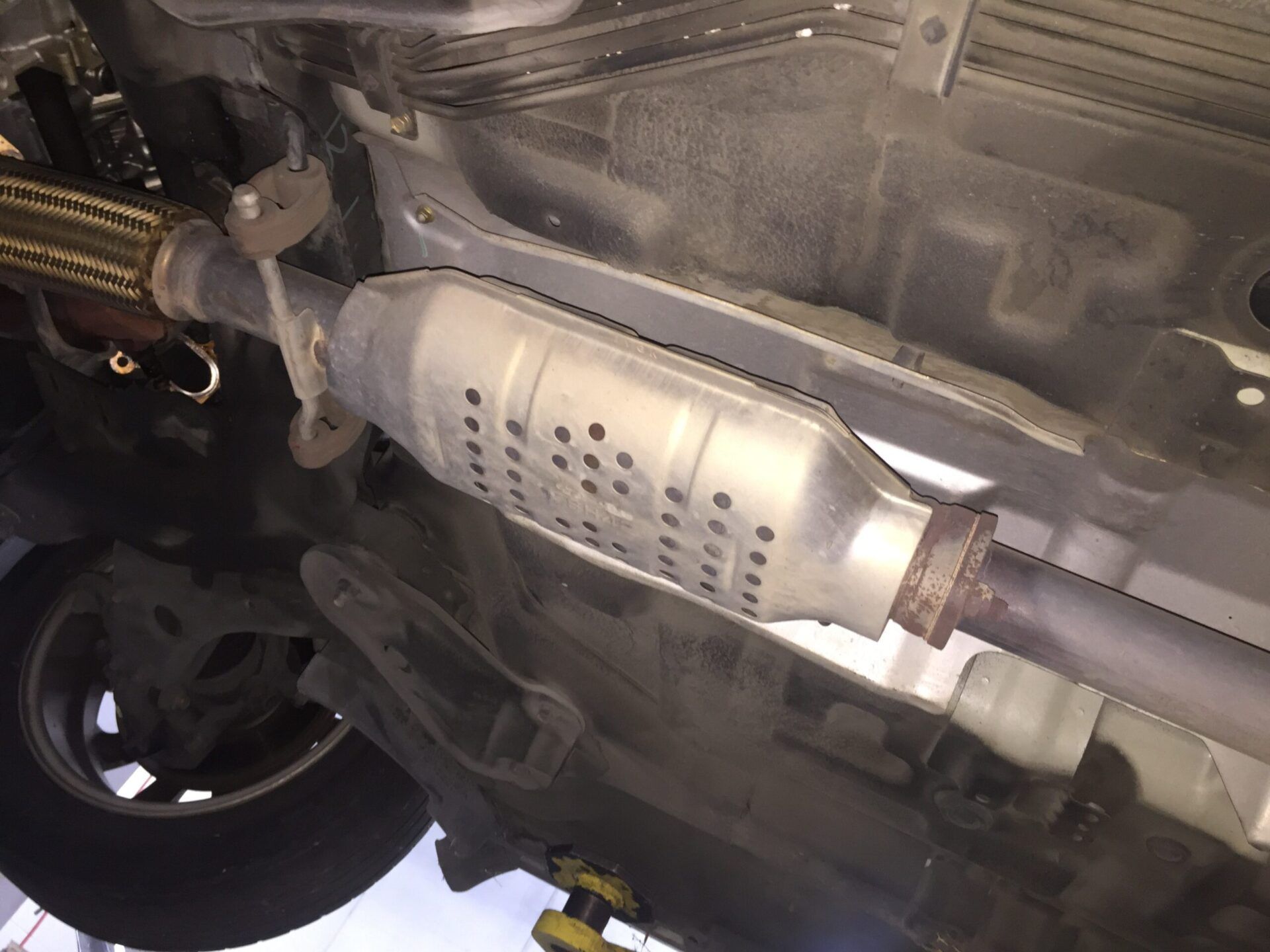
Thieves tend to mostly target vehicles with ultra-low emissions. This is because these cars have catalytic converters that contain more of the valuable rhodium, palladium, and platinum.
They also tend to go after trucks and SUVs because it’s easy to slide under those vehicles. Typically, these thieves just hack the cat converters off at the exhaust pipes with a portable electric saw rather than taking time to unbolt the converters.
Why Installing Catalytic Converter Cages or Shields Can Be Effective in Catalytic Converter Theft Prevention
To combat catalytic converter theft, many experts recommend installing catalytic converter cages. These security measures can make a significant difference. Here’s how installing catalytic converter cages can protect your vehicle:
Fluorescent Paint: Painting your catalytic converter with high-temperature fluorescent paint can act as a deterrent. It may render the stolen converter less valuable to thieves.
VIN Etching: Etching your Vehicle Identification Number (VIN) into the catalytic converter can help trace it back to your vehicle, potentially deterring thieves.
Comprehensive Insurance: Ensuring you have comprehensive insurance coverage that includes protection against stolen auto parts can provide financial security if a theft occurs.
While these measures are helpful, they are reactive rather than preventive. However, installing catalytic converter cages is a proactive approach that can significantly reduce the likelihood of theft.
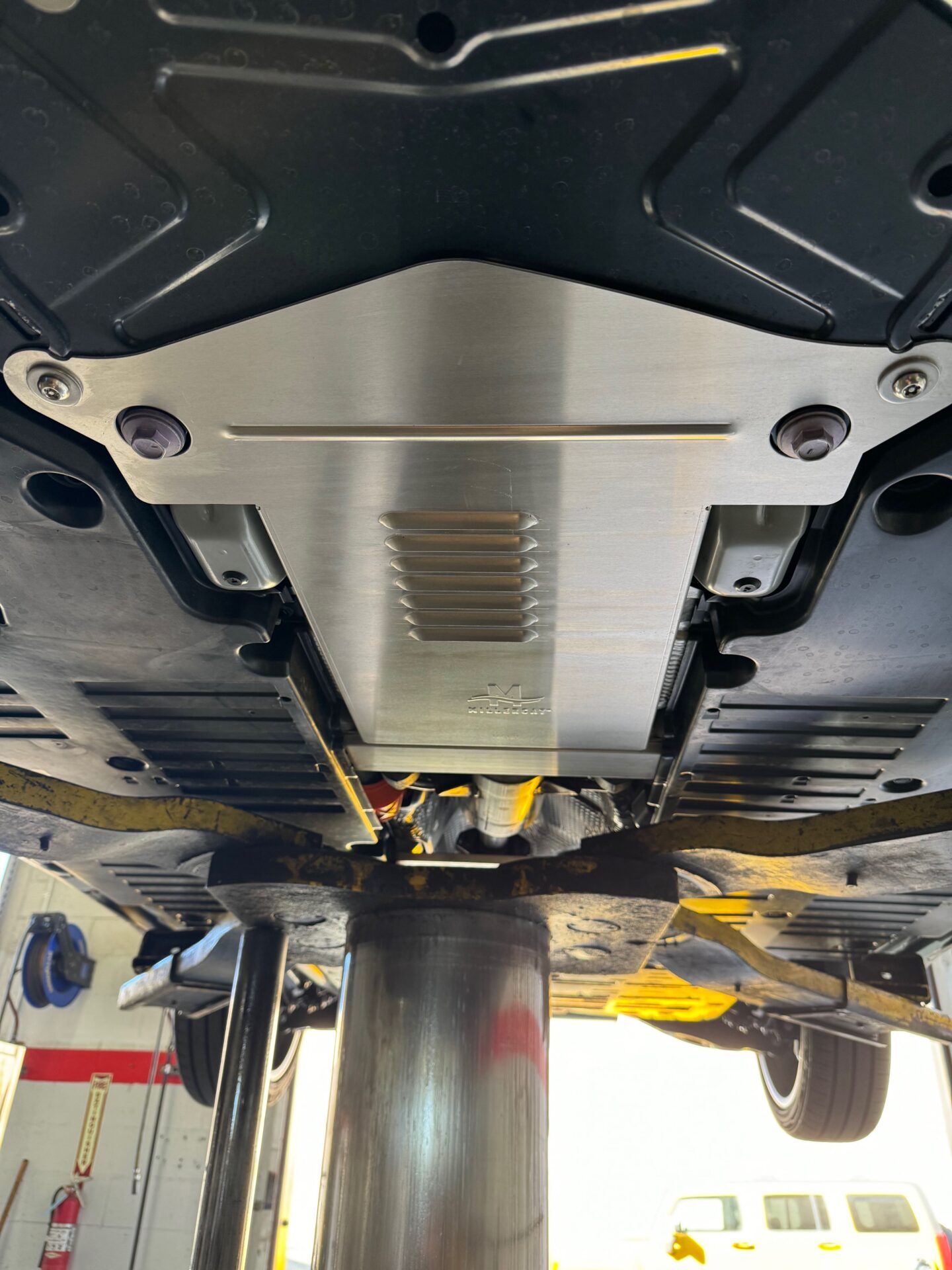
Catalytic Converter Shield that we installed on a Toyota Prius.
The Benefits of Installing Catalytic Converter Cages or Shields
Installing catalytic converter cages provides a physical barrier that can deter thieves. Although no security device is entirely foolproof, a well-installed cage can make your vehicle less attractive to opportunistic criminals. Think of it like this: a locked bike is far less appealing to a thief than an unlocked one.
At Temecula Auto Repair & Transmission, we offer a range of options for securing your catalytic converter. Our solutions include CatClamps, CatStraps, and CatCages. Additionally, we can custom-fabricate and weld a protective cage for vehicles with unique needs. If you’re searching for “installing catalytic converter cages near me,” look no further!
Our installations are done carefully to avoid any damage to the catalytic converter or its identifying information. Most importantly, we ensure that all vital information remains visible and do not weld directly onto the catalytic converter, as this could lead to complications during emissions testing.
So, Why Are Catalytic Converters A Target For Theft?
Most car owners probably know that there’s a part within their vehicle called the catalytic converter, sometimes called “cat converter” for short. You may know that the catalytic converter processes the emissions in your engine. But that’s probably about it. Most drivers aren’t really familiar with the ins and outs of how a catalytic converter works. Let’s dive in…
What Exactly is a Catalytic Converter?
Before getting into what a catalytic converter is, let’s talk about automobile emissions.
There are three types of harmful compounds within your engine’s exhaust that the catalytic converter deals with. Those three compounds are:
Carbon Monoxide: Carbon Monoxide is created when gasoline is combusted to power the engine.
Hydrocarbons: Not all gasoline ends up being combusted, and unburnt gasoline expels hydrocarbons.
Nitrogen Oxides: Nitrogen is naturally present in the air. As the engine heats up, nitrogen in the air combines with oxygen to produce nitrogen oxides.
All of these compounds are harmful. Hydrocarbons and nitrogen oxides contribute to smog and acid rain. Carbon monoxide is poisonous to humans (as well as animals). As such, we’re strongly incentivized to limit cars from putting too much of those compounds out into the air.
Enter the catalytic converter. The catalytic converter is a device mounted into the exhaust system. It consists of three subsystems.
The Substrate
The substrate is the outer structure of the catalytic converter. The core of a catalytic converter is made of ceramic material. It forms a square honeycomb structure. The substrate is built so that the surface area is maximized. Exhaust will flow through the substrate as the engine runs.
The Washcoat
The washcoat acts as a carrier for the catalyst. This is the last part of the catalytic converter. The washcoat is designed to further maximize the surface area within the core of the catalytic converter. It creates an irregular, uneven surface within the substrate. This means that exhaust passing through the catalytic converter is exposed to more of the catalyst.
The Catalyst
Finally, we come to the catalyst itself. The catalyst is the substance that converts the three harmful compounds into less toxic ones. Precious metals are used to make the “catalyst” inside the catalytic converter. The three precious metals most often used in a catalytic converter are platinum, palladium, and rhodium. These precious, and expensive, metals are what thieves are after when stealing catalytic converters.
The catalyst converts carbon monoxide into carbon dioxide, the same compound we exhale as we breathe. It converts hydrocarbons into carbon dioxide and water. And it converts nitrogen oxide into nitrogen and water.
The Important Role of a Catalytic Converter
It’s important to know that a properly functioning catalytic converter is essential for passing any emissions test. The State of California requires most vehicles to pass an emissions test every two years. Similar statutes exist in most other states. If a vehicle fails its emissions test it will not be legal to drive.
As a result, keeping your catalytic converter in good shape is important if you want to keep your car street legal.
Catalytic Converter Replacement
If your catalytic converter has been stolen, obviously, a replacement is now necessary. But theft is not the only possible demise of your catalytic converter. There are instances where a catalytic converter can be damaged or may go bad. This leads to the same expensive end result of having to replace it.
Knowing a little bit more about the catalytic converter can potentially save you money down the line. Replacing a catalytic converter is one of the more expensive repairs on cars these days. You can usually take steps to avoid reaching the point of having to replace it. Having knowledge of how a catalytic converter works and the signs of an at-risk or failing catalytic converter might be the difference between a $1,000 plus repair bill or not. Commonly, $1,000 to $3,000 is what one will have to pay for a catalytic converter replacement. Some specialty converters even exceed that price.
What are the Signs of a Bad Catalytic Converter?
There can be a variety of signs that your catalytic converter is failing or is not functional. The first, as mentioned previously, is a failed emissions test. This may be your first warning sign that something is wrong with your catalytic converter. However, there are a handful of other signs that can alert you before that point . Here are some of the common warning signs:
Check Engine Light: There are a number of reasons why the check engine light might illuminate on your vehicle’s dashboard. A bad catalytic converter is one of them. If you see this light come on, bring your car to us as soon as possible so that we can figure out what is going on and avoid further damage.
Rattling Noise: If you hear a rattling noise as your car idles, this could be a sign that your catalytic converter is going bad.
Decreased Fuel Efficiency: If you notice that your gas mileage is going down, this is another possible sign of a bad catalytic converter.
Reduced Engine Performance: If your car seems like it’s struggling or has lost some power when you press the gas pedal, the catalytic converter might be the culprit.
Other Potential Problems
Engine problems that result in excessive exhaust temperatures or unburned fuel can damage the catalytic converter. Regular maintenance of your vehicle’s engine is crucial to prevent such issues.
This September 22nd will mark the official beginning of the fall season. The changing of a season often serves as a good reminder to perform any service or maintenance your car needs.
As fall transitions into winter, you could be driving in some extreme conditions. So, getting the jump on routine maintenance ahead of time is always a good idea. In addition to routine vehicle maintenance, the start of fall can be a good time to consider some safe driving suggestions. While these tips apply to any time you’re driving, now is a good time to refresh your memory.
Routine Maintenance
Your car has several systems that need to be checked and maintained on a regular basis. Cars are durable and can last you for many years – well past a decade. But the only way to make sure your car performs consistently and lasts a long time is to stay current with routine maintenance. Not only will your car last longer and develop fewer problems, but more importantly you’ll also be safer on the road.
Bringing your car in to our professionals can save you a lot of time and hassle: Our Certified & Trained Mechanics know what systems need to be checked and can run through them all for you. But you can also act as your own first line of defense. The following are some automotive systems that require periodic checking and maintenance.
When it comes to vehicle safety, the condition and performance of your tires is crucial. Your car weighs thousands of pounds and, at times, travels at speeds more than 60 miles per hour. Your tires are your car’s sole point of contact with the road surface. Stopping, turning, and any other changes in speed are impacted by the condition of your tires.
If your tires are worn or otherwise not functioning correctly, the safety of all passengers is at risk. Tires simply wear out through usage and time, and eventually need to be replaced. The exact guidelines as to when you need new tires will vary depending on the tires on the car and the conditions in which you drive. In perfect conditions and with high quality tires, you might be able to get 50,000 miles or more before needing replacement. However, that’s not most typical but a best-case scenario.
There are several things that can greatly reduce the lifespan of your tires. Driving with low (or excessive) air pressure will cause your tires to wear unevenly. Alignment and other suspension problems can also rapidly wear out your tires. Unevenly worn tires are dangerous, both because they perform worse and are more susceptible to a sudden blow out. Our Certified Technicians can examine your tires to see if your tires are wearing unevenly and diagnose the cause of the problem before you need new tires. But periodic inspections and prevention is key.
We’ve likely all had at least one time in our lives when we’ve had to slam on the brakes. If something unexpected happens, it’s important to know that our brake system is working at peak performance. There are few things as terrifying as suddenly finding that the brakes aren’t responding as they should be.
Over time, the braking system wears out in a few predictable areas. One of the most common is the brake pads. Brake pads act as the external gripping surface between brake rotors and calipers. As such, they experience extreme heat and friction and will wear down over time. It’s possible to check your own brake pads and even replace them if you have the know-how and time.
Other areas that are prone to breakdown or wearing out are brake discs (rotors). Often, these breakdowns are the result of ignoring a minor problem. For instance, a worn-out brake pad will cause either the brake pad backing plate or the caliper to rub directly against the brake rotor. This can ruin the rotor and lead to you needing to replace the rotor or the caliper, a repair that is considerably more costly than the price of just brake pads alone.
Your car has several systems that use a variety of fluids. The most thought of fluid system is your engine and engine oil. Everyone knows that vehicles require periodic oil changes to maintain engine good function and lifespan. But there are a handful of other systems in your car that use fluids and can require a periodic flush out or fluid replacement.
Engine Oil
The engine is the one that almost everyone is familiar with. Engine oil keeps your engine lubricated and prevents it from overheating and breaking down. You should pay attention to your oil levels and get an oil change around once every 3,000 to 7,500 miles, depending on the type of oil and vehicle manufacturer’s specifications.
Brake Fluid
Getting back to the brakes again – The braking system is a hydraulic system, which means it’s powered by pressurized brake fluid. This brake fluid can become contaminated over time, requiring a periodic flush. We recommend flushing brake fluid at least every two years, or per vehicle manufacturer’s recommended interval. Your brake system can also sometimes develop a leak. If your brakes aren’t performing at peak levels, it’s time to come in for a brake inspection. Your car’s radiator, power steering system, and transmission all contain fluids as well.
Conclusion
You don’t need to check on these fluids as frequently as you do your engine oil. But it doesn’t hurt to be aware of them and periodically inspect them. Make sure that levels are appropriate and that the fluid is still in good shape. Fluid breakdown is the most common condition that leads to the demise of the system or components they serve. Finally, don’t forget about your windshield washer fluid. A big part of driving safely is being able to see where you’re going. Making sure you have an adequate level of windshield washer fluid covers your bases if you find yourself driving in dirty or dusty conditions.
Seat Belts and Child Safety
None of us ever want to imagine that we’re going to get into a car accident. But even with the best driving practices, it can happen. If you do find yourself in a car accident, your seat belt or child seats can literally save your life. A big part of being able to drive safely is having the peace of mind to know that you’re protected even in the worst case. This should hopefully go without saying, but don’t ever drive if a seatbelt in use by either yourself or a passenger is broken.
Even for short periods of time, this would be a dangerous practice. Make it a priority to come in for repair of any seat belt that breaks. This goes double for car seats or any safety equipment for babies and children. Children are especially vulnerable in car accidents and are easily jolted by fast turns or sudden stops. So, it’s important to make frequent inspections of child safety equipment and repair or replace the faulty item as soon as you find anything wrong.
Driving Tips
If your vehicle is in tip-top shape, the half the job’s done in terms of vehicle safety. The other half is actually driving safely. Hopefully you’re already a driver with good habits as a motorist. But a refresher every now and then can’t hurt. Here are a few things we see too many people out on the road not heeding.
Tailgating
When traffic is bumper to bumper during rush hour or in the city, sometimes you can’t help but drive extremely close to the car in front of you. But whenever you can avoid it, you should leave at least a few car lengths between you and the vehicle in front of you.
You never know when the car in front of you is going to slam on the brakes. And if you rear-end the car in front of you when they brake, most times you’ll be found at fault for the accident. Leaving a safe following distance gives you more time to react. And that extra second or two of reaction time can be the difference between an accident or not.
Limit the Phone Use
By now, everyone has been inundated by messages warning about the dangers of texting and driving. And for good reason: The number of car accidents caused by drivers distracted by their phones has risen sharply. “In 2020, 3,142 people were killed in motor vehicle crashes involving distracted drivers,” according to the National Highway Traffic Safety Administration (NHTSA). Even talking on the phone using speakerphone should be avoided whenever possible. Any distraction while you’re on the road makes it more likely that you’ll react badly to an unexpected incident. But anything that takes your eyes off the road and your hands off the wheel is especially bad. You can wait until you get there to read your text messages.
Expect the Unexpected
The difference between getting into an accident or not can be as simple as how closely you’re paying attention. If your mind is on autopilot while driving, you could be fine right up until the point when something unexpected happens. Unfortunately, that’s the moment when you need to be alert and attentive. Driving can seem like a rote and boring activity, and it’s tempting to let your mind wander. Instead, try to anticipate any issues that may come up on the road. If you’ve already thought about what you’ll do if it happens, you’re that much quicker toward taking measures to avoid whatever problem arises.
As summer rolls on, many people are planning for vacations, often involving a lengthy road trip. A road trip can be almost as much fun as the vacation destination itself, as long as you don’t run into any problems along the way.
While a problem-free road trip can make happy memories that last for decades, a bad road trip can create unpleasant memories just as long-lasting. Few things can ruin a road trip like car trouble.
There’s no way to totally ensure that you won’t run into car troubles on the road – After all, random issues can crop up even for a well-maintained vehicle. But you can significantly lower the odds of experiencing car problems by taking a series of checks and maintenance steps before any lengthy road trip. The question now is how do you get your car ready for a road trip?
It’s especially critical to prepare your car for a road trip for two reasons:
Number one, driving for multiple hours on end puts stress on your vehicle that it doesn’t normally experience during a daily commute. If there are any lurking issues, they may not be exposed in the course of your routine driving. But they might very well hit a breaking point during, say, hour five of your road trip.
The second reason it’s so important to prepare for road trips is that if you run into car troubles, you’re likely to be in unfamiliar surroundings. You might be broken down on the side of a highway miles from a town or even gas station. You’ll be dependent on the services of mechanics you have no relationship with or way to verify. And on top of that, any car trouble you run into is cutting into your precious vacation time, or else delaying your return home when you’re looking to sink peacefully back into your day-to-day routine.
The bottom line is that, if you want to avoid that nightmare scenario of car problems during a road trip, you will want to have your car inspected and prepared in a handful of ways.
Tires
Your tires are responsible for gripping the road, providing traction as you steer and brake your vehicle. In everyday life, your car’s tires are important. And that goes doubly so when taking an extended road trip.
The obvious worst-case scenario is for your tire to blow out or go flat as you drive. But even if you don’t end up with a flat tire, worn out or damaged tires can negatively impact your safety and driving experience.
Often times, a road trip will take you through mountainous or hilly terrain, and you’ll frequently end up driving through rain and wet roads, even in summer. The condition of your tires when driving through elevation, especially at high speeds on the highway, can be the difference between maneuvering safely and losing control of your vehicle.
Before taking a road trip, make sure to visually inspect your tires. If you can observe any uneven wear patterns, or if your tires appear to be significantly worn, it might be time to replace them. Worn tires are more vulnerable to punctures or going flat, and don’t grip the road as well, resulting in poor handling. If you’re unsure as to your tires’ condition, you can always bring the vehicle in to our professionals for an evaluation.
You will also want to make sure that the air pressure in your tires is at optimal levels. Underinflated tires will cause uneven wear over time, and also decrease your vehicle’s responsiveness on the road. And overinflated tires also cause unusual wear, may result in vehicle handling problems, and are at greater risk of blowing out. Making sure that the air pressures are at specifications before taking a road trip is a small step that can save you a big headache.
Finally, many people will check the four tires on their car but neglect the spare tire. If you do end up needing to replace a tire, the worst feeling possible is realizing that your spare is missing, damaged, or in some way not up to snuff.
And don’t forget all the equipment necessary to change the tire. Make sure you have a jack and a lug wrench along with your spare tire. It might even be a good idea to practice using the jack to raise your car and loosen the lug nuts with the wrench if you haven’t changed tires before. A little practice at home can make a big difference in the future if you’re on the side of the road with a flat tire.
Brakes
Your braking system is one of the most critical and hardest working set of components in your vehicle, responsible for bringing a car weighing thousands of pounds to a stop from high speeds. All that friction and stress will eventually wear your brakes, decreasing performance and putting the system at risk of malfunction or failure.
It should go without saying that you’re going to be relying on those brakes heavily on a long road trip. Over hundreds of miles, you’ll be counting on your brakes to perform reliably. It’s important to make sure your brakes are in tip-top shape before going on a lengthy road trip.
There are several points at which brakes can fail, with one of the most common being the brake pads. Brake pads grip onto the brake rotors within the wheels of your vehicle, applying the friction to bring the car to a halt. Tremendous heat and strain results from the repetitive use of the brakes, and much of that stress goes to the brake pads.
Over time, brake pads wear out and need to be replaced. It’s possible to check the condition of your brake pads yourself, and this can be easier or harder to do depending on how your car is set up. Assuming you know what to look for, make sure to access your brake pads and confirm that they have plenty of life remaining in them before going on a road trip. Alternatively, you can bring your car in for service, where our team of experts will inspect your brake pads’ condition.
While brake pads are one of the most likely culprits for brake-related maintenance, that’s not the only part of the brakes which can have problems. Components ranging from the discs to the calipers to issues with the hydraulic system can become damaged or worn out. Be on the lookout for signs that your brakes need attention – Noises, vibrations, or grinding when braking can be clear signs of a problem. A feeling of ‘softness’ when depressing the brake pedal can also point to issues. If you observe anything along those lines, make sure to get it resolved before hitting the road.
Filters, Belts and Hoses
Many people overlook their car’s belts and hoses when considering parts and systems requiring maintenance, and maybe forget to change the air filter every now and again. However, the condition of the various filters, hoses and belts within an automobile suffer wear and tear over time, and can eventually begin to fail. The effects of a leaking hose or a clogged filter may be subtle at first, but can cause real problems over time. And a frayed and worn belt eventually breaking can very dramatically cause you a problem, especially when far from home on a road trip.
The hoses within your car carry a variety of fluids to your engine and other critical systems in your vehicle. In a lot of ways, they’re like the veins and arteries carrying blood throughout a body. Over time, hoses can erode and develop tiny cracks or holes, and these can widen over time. A small crack may not cause a significant loss of fluids, but even incremental fluid loss will lower fluid quantities below recommended levels over time. And a larger crack or hole can quickly deplete a system of necessary fluid.
Before taking a road trip, give your vehicle an inspection under the hood. Can you see any fluids leaking from any hoses, or fluids pooled beneath hoses? Are there any wet spots on your garage floor or driveway? Are fluid levels low? Any of this may indicate you have a worn or damaged hose in need of replacement.
It’s more difficult to evaluate the quality of the belts within your vehicle without specialized knowledge. Certain belts like a serpentine belt or a rubber timing belt tend to have service lives of around 100,000 miles. This, though, is no guarantee that you’re definitely safe inside that mileage range. Certain older models of cars have v-belts with a significantly shorter life. If you’re worried about the condition of your car’s belts – or hoses, for that matter – our Standard Vehicle Inspection will include a good look at the condition of your belts and hoses.
When it comes to filters, many people are aware of the need to periodically replace their air filters. There are several other filters that require periodic replacement too – The oil filter, the cabin filter, and the fuel filter, on some vehicles. Most filters will last at least 10,000 miles, but if it’s been a long time since replacing any, it’s worth getting them inspected and potentially replaced.
Fluids
When considering your vehicle’s fluids, you might think about motor oil, or maybe windshield wiper fluid. In truth, there are seven main fluids within any vehicle, all of which perform important roles in keeping your car running smoothly and safely. It’s a great idea to confirm your car’s fluids are in good shape and at optimal levels before embarking on a long road trip.
The seven major fluids are:
Motor Oil – Responsible for lubricating your engine, motor oil is one of the most crucial elements of a healthy car.
Washer Fluid – Washer fluid, sprayed onto the windshield to assist in cleaning the windshield, is a must if driving in any dirty, dusty or muddy conditions.
Transmission Fluid – What motor oil is to the engine, transmission fluid is to the transmission, lubricating the system and preventing breakdowns.
Radiator Fluid – This fluid prevents your engine from overheating, and low levels can lead to overheating and eventual breakdown.
Brake Fluid – The hydraulic brake system requires brake fluid to function properly, and insufficient brake fluid will significantly decrease the effectiveness of your brakes.
Power Steering Fluid – This fluid lubricates your power steering system, allowing you to maneuver your car with little to no strain or effort.
Air Conditioning Refrigerant – If you’re driving anywhere hot, you’ll want to make sure your air conditioning refrigerant levels are up to standard.
All fluids will wear out or break down over time, though the service lives of each type of fluid will vary. Some, like motor oil, need to be replaced fairly frequently, while others, such as power steering fluid, last longer before needing replacement. Additionally, all fluid levels can decrease due to leaks or other inefficiencies within various hoses and components in your car.
If you’re going to hit the road for an extended trip, it’s always a wise move to make sure your fluid levels are topped off, and that all your fluids are in good shape. Some fluids are easy to check for yourself, like motor oil. Others, like air conditioning refrigerant, require specialized equipment and knowledge. Fluid levels are another part of a vehicle inspection.
Battery
This one’s simple – If your battery dies, your engine will not start, and your car isn’t going anywhere. The battery is responsible for starting your car, in addition to powering several other electronic systems.
Signs of a failing, or weak battery can include dim headlights, a clicking sound when starting the engine, a slow crank when turning the ignition key. If you observe any of these symptoms, it’s very possible that your battery is nearing the end of its life.
If you suspect your battery might be on the verge of dying, make sure to replace it with a new one before setting out on a lengthy road trip.
Lights
If your car’s lights seem dimmer than normal, the issue might be the battery, as discussed above. But another culprit might be the light bulbs themselves. Over time, your car’s lights will begin to wear out and eventually fail.
Other signs of worn-out lights can be your lights flickering periodically, or eventually the light burning out entirely and going dark. Most road trips will include driving at night or during in low-visibility conditions – including driving through rain. A set of functioning lights is especially necessary in those conditions, and it’s worth the extra few minutes to ensure your lights are in good shape before taking a road trip.
Wiper Blades
Finally, before setting out on a road trip it’s a good idea to check an often-overlooked vehicle component – your wiper blades. Especially if you live in an area without a lot of rain and snow during certain seasons, you might tend to take your wipers for granted. But going on a prolonged road trip through inclement weather is no fun at all if your wiper blades are worn out and not working properly.
Take a moment to inspect the blades to ensure that they’re not worn or cracked. You can also test them by applying water to the windshield and verifying that they smoothly and totally wipe it away. If your wiper blades are worn out, be sure to replace them before taking a long road trip. You might get lucky and encounter nothing but sunny skies. However, if it does rain, you’ll be extremely happy you were prepared.
Get Your Car Ready For a Road Trip With Temecula Auto Repair & Transmission
Ready to hit the road? Ensure your car is in top shape with a comprehensive check-up at Temecula Auto Repair & Transmission. Whether it’s an oil change, brake inspection, or transmission service, our experienced technicians have you covered. Don’t let unexpected car troubles ruin your trip. Schedule your pre-road trip inspection today and drive with confidence. Call us now or visit our shop and keep your journey smooth and worry-free!
Harnessing Expert Insights: Unraveling Check Engine Light Causes and Remedies for Optimal Vehicle Performance
The Check Engine Light, the Malfunction Indicator Lamp (MIL), or what on some cars is the Service Engine Soon Light. While it goes by several names, it’s a light that all drivers dread seeing illuminate on their dashboards. Almost everyone has had the experience of having to deal with his or her Check Engine Light coming on at least once.
What makes the Check Engine Light especially annoying is that there’s no one specific reason for it to light up. With many other dashboard warning lamps and messages, the cause is typically simple and clear. If the Low Oil Light is on, for example, you’re probably low on oil. Or, if the Maintenance Required Light comes on, it’s time for an oil change or other routine service.
With the Check Engine Light, though, it’s not so clear. Any one of a number of different causes could be responsible for the light turning on. Some of them are inexpensive and relatively easy to fix. Others are far more complex, serious, and require urgent attention. To take some of the fear of the unknown out of the Check Engine Light, it’s worth taking a little time to understand the range of possible reasons why the light kicks on.
Common Causes for the Check Engine Light
The good news about the Check Engine Light turning on in your vehicle is that there’s a pretty good chance that it doesn’t mean disaster. Many of the common causes for the Check Engine Light are relatively minor issues. Most aren’t very expensive to fix.
However, in order to fix the underlying problem, one has to be able to diagnose what it is. That’s not always easy to do if you’re not experienced with working on cars. Most times, when the Check Engine Light turns on you won’t immediately observe any difference in your vehicle’s performance. It’s going to be hard to rule out any possible issue without investigating more deeply.
Given that you won’t be able to immediately know what’s wrong, it’s useful to at least know the range of possible causes of the Check Engine Light. Being informed as to the likely possibilities gives you a head start in trying to diagnose the actual problem. Below are some of the most common Check Engine Light causes we see here at Temecula Auto Repair & Transmission.
Faulty Catalytic Converter
Let’s start with one possible worst-case scenario. Your catalytic converter may be faulty. The catalytic converter is a crucial part of the exhaust emissions system. If it begins to fail it will cause your Check Engine Light to light up. Out of all the possibilities, this is the one that would potentially be most expensive to repair. Typically catalytic converters cost over $1,000 to repair or replace on average. A failed catalytic converter is also necessary to address quickly.
The catalytic converter is responsible for breaking down poisonous and toxic exhaust gasses such as converting carbon monoxide into harmless gasses and compounds. If the catalytic converter isn’t working, you won’t pass your Smog Check, and your vehicle’s general performance could degrade significantly. You’ll sometimes see poorer acceleration, general performance deficiencies, and gas mileage may also suffer.
This may all paint a gloomy picture. However, you should be aware that faulty catalytic converters happen almost exclusively because the owner of the vehicle isn’t keeping up with routine maintenance. In fact, many of the other reasons that the Check Engine Light comes on can lead to a breakdown of the catalytic converter over time. This is why it’s important to come see us right away whenever the check engine light comes on. By being vigilant about your vehicle’s well-being and getting regular maintenance, you’ll dramatically reduce the odds of having a catalytic converter fail.
In the state of California, the second most likely reason the Check Engine Light comes on is due to a problem with the catalytic converter.
Damaged, Missing or Loose Gas Cap
From the most serious possibility, we move to the least costly reason for the Check Engine Light to turn on. If the gas cap isn’t keeping pressure in the fuel tank, this will cause gasoline fumes to escape the tank. This in turn, will trigger the Check Engine Light. If the Check Engine Light comes on, this should be your number one starting point in trying to figure out the issue.
First, undo and re-fasten your gas cap, and then turn on the engine again. Drive the car for a bit, and see whether the Check Engine Light remains on.
In comparison with most of the other issues possibly causing the Check Engine Light to go on, an issue with the gas cap is the best-case scenario. A faulty or loose gas cap is usually something you can fix easily and quickly.
Malfunctioning Spark Plugs and Wires
Another possible reason for the Check Engine Light coming on are faulty spark plugs. A spark plug’s function is to give a spark to initiate the engine’s combustion process. If a spark plug goes bad or wears out, it can cause the engine to misfire. An engine misfire will always trigger the check engine light to come on. A telltale sign that a spark plug has gone bad is a minor jolt when you accelerate your vehicle. Other signs of misfiring spark plugs are trouble starting your car and reduced fuel efficiency. A rough engine idle is one more sign that can point to a misfire.
If your spark plugs are faulty, this is an issue you want to resolve as soon as possible. In addition to trouble with acceleration and fuel economy, bad spark plugs can lead to additional damage to your engine over time.
Malfunctioning Oxygen Sensor
The oxygen sensor regulates the mixture of fuel and oxygen in your engine. Over time the oxygen sensor can become fouled with ash or other exhaust build-up. When this happens, its ability to regulate the mix of oxygen and fuel begins to diminish or fail. This can cause the Check Engine Light to turn on. In addition, when the oxygen sensor isn’t working, you’ll experience increased emissions and lower fuel economy.
One very important thing to know is that driving a vehicle with a damaged or faulty oxygen sensor can cause damage to the catalytic converter. It’s considerably less expensive to have an oxygen sensor fixed than a catalytic converter. So, it’s another reason to deal with a Check Engine Light as soon as possible, in case it’s an oxygen sensor problem.
It’s worth noting that the number one cause of a Check Engine Light in the state of California is a problem with the oxygen sensor.
Malfunctioning Mass Airflow Sensor
Another possible culprit for a lit-up Check Engine Light, is a problem with your mass airflow sensor. The mass airflow sensor sends information to and from your vehicle’s computer. This electronic communication is to synchronize fuel in your engine based on current airflow into the engine. If your vehicle has an old air filter or a poorly installed air filter it can cause damage to the mass airflow sensor.
If this happens, you’ll experience higher emissions and poor fuel economy, similarly to many of the other causes of the check engine light. You’ll notice that several symptoms of the various causes of the Check Engine Light are nearly identical. This makes it difficult to diagnose the problem easily.
The biggest preventative thing you can do to avoid trouble with the mass airflow sensor is to replace your air filter once a year or more frequently. By doing so, you decrease your risk of having problems which can be considerably more costly down the line.
Less Likely Check Engine Light Issues
The catalytic converter, gas cap, spark plugs, oxygen sensor and mass airflow sensor are the most likely reason for a Check Engine Light coming on. In most cases, it’s going to be one of those five root causes. However, there’s a chance that it’s none of the above, and instead one of a handful of other less likely problems is causing the light.
A broken or malfunctioning thermostat or ignition coil are less common causes. Problems within the evaporative emissions (EVAP) system can also cause the Check Engine Light to turn on. While these tend to be less common, it’s impossible to rule these out as the cause without investigating further.
A Flashing Check Engine Light
Briefly, it’s worth talking about the rare possibility of a blinking Check Engine Light. This is an uncommon occurrence, but also marks a much more serious problem. So, it’s good to be aware of it.
With all of the above-discussed problems, the Check Engine Light will typically not blink. It will just be a solid, unchanging warning light. If the light is not blinking, this is a problem you need to address at some point, preferably as soon as you’re able. However, a solid Check Engine Light is not an immediate danger to your vehicle. In other words, you can drive your vehicle for a little while if you need to.
That isn’t true if the Check Engine Light is blinking. If that’s the case, this means your engine is having a serious problem. One possible cause of a blinking Check engine Light is that fuel may be inside the catalytic converter itself. If this happens, driving the vehicle risks significant damage. There’s also a risk of your vehicle breaking down or, worse, catching fire due to raw fuel in the exhaust.
If the light is blinking, it’s best to safely pull over and tow the car in to us immediately.
Self-Diagnosing Using Check Engine Codes
When Free Is Too Good To Be True
You may be aware of a service provided by certain auto parts stores where they’ll give you a free reading to determine the code associated with your Check Engine Light. The store will then sell you parts associated with that code to fix the Check Engine Light to avoid going to a professional shop. For example, retrieve a code most associated with an oxygen sensor issue. Then the store will sell you an oxygen sensor.
This method of fixing your Check Engine Light will sometimes be successful, but it’s not guaranteed by any means. You should know trying to self-diagnose using the check engine codes can lead you astray. This could cause you to waste money on unnecessary parts.
What makes this method less than foolproof is that check engine codes don’t always match up with the exact root cause of the Check Engine Light on. As you probably noticed from reading the common causes of the Check Engine Light, many of the systems and parts responsible are complicated and sometimes intermingled with one another. As a result, a code that ‘usually’ means one part is faulty may in fact have a different root cause of the real problem. Additionally, there are other components directly involved in these systems. For example, faulty oxygen sensor wiring will store an oxygen sensor code as much as a faulty oxygen sensor would.
So, you could encounter a scenario wherein you get your code readout and spend a decent amount of money on a part that’s supposed to fix your problem. You install the part, and sometimes the Check Engine Light stays on. Or maybe it turns off, but then comes right back on in a day or two.
A Proper and Thorough Evaluation Is The Best Approach
The way to guarantee that the problem causing your Check Engine Light to come on is fixed is to bring your vehicle in for a proper evaluation by our professionals. We have the right tools and know-how to correctly diagnose the real issue. We’ll then make recommendations that will ensure you’re back on the road no longer troubled by that annoying Check Engine Light. If you need help with a Check Engine Light or any other car issues, Book An Appointment today.
We use cookies to improve your experience on our site. By using our site, you consent to cookies.
This website uses cookies
Websites store cookies to enhance functionality and personalise your experience. You can manage your preferences, but blocking some cookies may impact site performance and services.
Essential cookies enable basic functions and are necessary for the proper function of the website.
Name
Description
Duration
Cookie Preferences
This cookie is used to store the user's cookie consent preferences.