


Noticing a strong gasoline odor inside or around your car is certainly concerning. A fuel smell could indicate minor issues or serious safety hazards. Over time, worn seals can leak fuel, causing a strong gas odor, especially in the engine bay. Here are the most common reasons why your car may smell like gas.
Fuel Leaks
Fuel Lines:
Over time, fuel lines can deteriorate due to corrosion, heat exposure, or physical damage. For example, cracks, pinholes, or loose fittings can allow fuel to escape, often leaving behind a strong gasoline odor. Rubber fuel hoses can also dry out and develop leaks.
Fuel Tank:
The fuel tank is susceptible to rust, impact damage, or even manufacturing defects that can cause leaks. Road debris, harsh weather conditions, and prolonged exposure to moisture can accelerate corrosion, leading to fuel seepage.
Fuel Injectors:
Fuel injectors rely on seals and O-rings to prevent leaks. However, worn seals can leak fuel over time, causing a strong gas odor. Also, faulty or clogged injectors may leak fuel.
Fuel Rail:
In fuel-injected engines, the fuel rail distributes fuel to the injectors. But, cracks, failed seals, or loose connections can leak fuel, causing a strong gas smell, especially when running.
Loose or Faulty Gas Cap

A loose, missing, or damaged gas cap can allow fuel vapors to escape, creating a noticeable gasoline smell. Consequently, a faulty fuel cap can cause gas odors and trigger the check engine light in sealed fuel systems.
Overfilled Gas Tank
Overfilling your gas tank can cause excess fuel to overflow into the charcoal canister or EVAP system. The EVAP system captures and stores fuel vapors, preventing their release into the atmosphere. However, liquid fuel can saturate the charcoal canister, weakening its function and causing strong fuel odors near your vehicle.
Overfilling can also lead to other issues, such as:
Damage to the EVAP System:
Excess fuel can clog the charcoal canister, triggering the check engine light and costly repairs.
Fuel Expansion Problems:
Gasoline expands with temperature changes. Overfilling eliminates the necessary air space in the tank, increasing the risk of fuel leakage due to pressure buildup.
Wasted Fuel and Environmental Impact:
Overflowing fuel can drip onto the ground, evaporate into the air, and contribute to air pollution. Also, it wastes money by spilling fuel instead of keeping it in the tank.
To prevent these issues, it’s best to stop refueling once the nozzle clicks off. Additionally, modern fuel pumps detect a full tank. Therefore, adding more fuel can cause damage instead of helping.
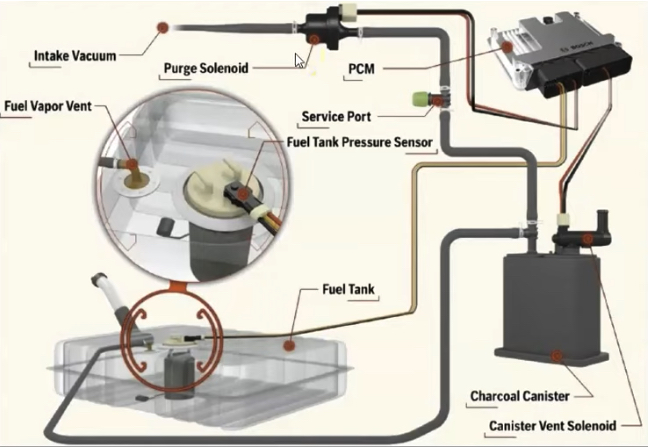
Faulty EVAP System
The evaporative emissions control (EVAP) system captures and stores fuel vapors from the fuel tank. Most importantly, it prevents these vapors from escaping into the atmosphere and causing air pollution. It directs vapors into a charcoal canister. The canister stores them before they go to the engine for burning. Thus, when the EVAP system functions properly, it helps improve fuel efficiency and reduce harmful emissions.
However, when EVAP components fail, fuel vapors escape, causing a noticeable gasoline smell. Common EVAP system issues include:
Damaged or Cracked Charcoal Canister:
The charcoal canister is responsible for absorbing and storing fuel vapors. However, over time, it can become saturated, cracked, or damaged due to age, contamination, or overfilling of the fuel tank. So, if the canister fails, it may release excessive vapors, resulting in a persistent fuel odor. Also, a damaged canister can trigger the check engine light.
Faulty Purge or Vent Valve:
The purge valve sends vapors to the engine for combustion, while the vent valve controls airflow. Thus, if either valve malfunctions, it can cause excessive vapor buildup or leaks. Consequently, this leads to noticeable fuel smells and rough engine performance.
Loose, Disconnected, or Cracked EVAP Hoses:
The EVAP system relies on a network of vacuum hoses to transport fuel vapors. However, these hoses can deteriorate due to heat, age, or exposure to fuel and chemicals, leading to leaks. Moreover, a loose or disconnected hose can release vapors, causing a strong gas smell and an EVAP trouble code.
Signs of EVAP System Problems
– Persistent fuel smell, especially around the vehicle or near the fuel filler area.
– The check engine light illuminated, often with codes related to the EVAP system (such as P0440, P0455, or P0456).
– Hissing sounds near the fuel tank or charcoal canister, indicating a vacuum leak.
– Difficulty refueling, such as slow fuel filling or the fuel pump nozzle shutting off frequently.
Why You Should Address EVAP Issues
Ignoring EVAP issues reduces fuel efficiency, increases emissions, and can damage the fuel tank or engine. Suspect an EVAP issue? Our professional diagnostic test with a smoke machine or scan tool can help.
Exhaust Fumes or Unburned Fuel
A “rich” engine runs with too much fuel in the air-fuel mixture compared to the ideal ratio. This excess fuel may not fully combust, leading to a noticeable gasoline smell in the exhaust. Consequently, a rich condition reduces fuel efficiency and increases carbon buildup in the engine. Also, it raises emissions and can damage components like the catalytic converter.
Common Causes of a Rich Fuel Mixture
Faulty Oxygen Sensors:
Oxygen sensors monitor exhaust gases and provide feedback to the Engine Control Module (ECM) for fuel mixture adjustments. A faulty sensor may signal a lean mixture, causing the ECM to add excess fuel. Consequently, this results in a rich-running engine and excessive unburned fuel in the exhaust.
Bad Fuel Pressure Regulator:
The fuel pressure regulator controls the pressure of fuel delivered to the injectors. However, a malfunctioning sensor can allow too much fuel into the engine, whether stuck closed or leaking. Additionally, a faulty regulator causes a rich fuel mixture, leading to black smoke, poor acceleration, and fuel odor.
Leaky Fuel Injectors:

Fuel injectors are responsible for delivering the precise amount of fuel into the combustion chamber. But, a stuck open injector, worn seals, or fuel dripping when closed can send excess unburned fuel to the exhaust. As a result, this not only creates a fuel smell but can also lead to engine misfires and rough idling.
Symptoms of a Rich-Running Engine
– Strong gasoline smell from the exhaust, particularly at idle or during acceleration.
– Black smoke coming from the tailpipe due to incomplete fuel combustion.
– Reduced fuel economy and increased fuel consumption.
– Rough idling or hesitation during acceleration.
– Check engine light illuminated with possible trouble codes (such as P0172 or P0175, indicating a rich condition).
– Soot buildup on spark plugs due to excessive fuel exposure.
Why a Rich Mixture Is a Problem
A continuously rich-running engine causes carbon buildup inside the combustion chambers and fouls spark plugs. Consequently, excess fuel burning inside the exhaust can lead to premature catalytic converter failure. Also, it significantly increases emissions, contributing to environmental pollution and potentially causing the vehicle to fail emissions tests.
If you suspect your engine is running rich, it’s important to diagnose the issue quickly. Our technicians use tools like an OBD-II scanner, fuel pressure gauge, and exhaust gas analyzer. Moreover, these tools help identify the cause of the rich mixture and make repairs before further damage.
Malfunctioning Catalytic Converter
A failing catalytic converter impacts emissions by not breaking down pollutants like unburned fuel, carbon monoxide, and nitrogen oxides. Therefore, the catalytic converter converts these substances into less harmful gases before they exit through the exhaust system. However, a clogged or damaged converter may let gas fumes and unburned fuel pass, causing a gasoline smell.
Signs of a Failing Catalytic Converter
Persistent Fuel or Rotten Egg Smell –
If the converter can’t process unburned fuel, you’ll notice a strong fuel odor or sulfur-like smell from the exhaust.
Check Engine Light –
A failing catalytic converter often triggers the check engine light. As a result, it commonly produces codes like P0420 or P0430.
Decreased Fuel Efficiency –
A partially clogged catalytic converter creates exhaust flow restrictions, forcing the engine to work harder and consume more fuel.
Reduced Engine Performance –
A severely clogged converter restricts exhaust flow, causing sluggish acceleration, rough idling, and power loss.
Excessive Heat or Rattling Noise –
Fuel buildup inside the converter can overheat, damaging the honeycomb structure and causing a rattling sound from loose fragments.
Causes of Catalytic Converter Failure
Rich Fuel Mixture –
An engine running too rich (with excess fuel) can overwhelm the catalytic converter, causing it to overheat and deteriorate.
Oil or Coolant Contamination –
Internal engine leaks can allow oil or coolant to enter the exhaust, coating the catalytic converter and reducing its efficiency.
Long-Term Ignition Issues –
Misfires and incomplete combustion can send unburned fuel into the exhaust system, damaging the catalyst over time.
Why a Failing Catalytic Converter Is a Serious Issue
In brief, ignoring catalytic converter issues can lead to severe engine damage, excessive emissions, and potential failure of emissions tests. So, if you notice fuel odors, reduced power, or a check engine light, inspect your exhaust system to avoid costly repairs.
Old or Damaged Spark Plugs and Wires
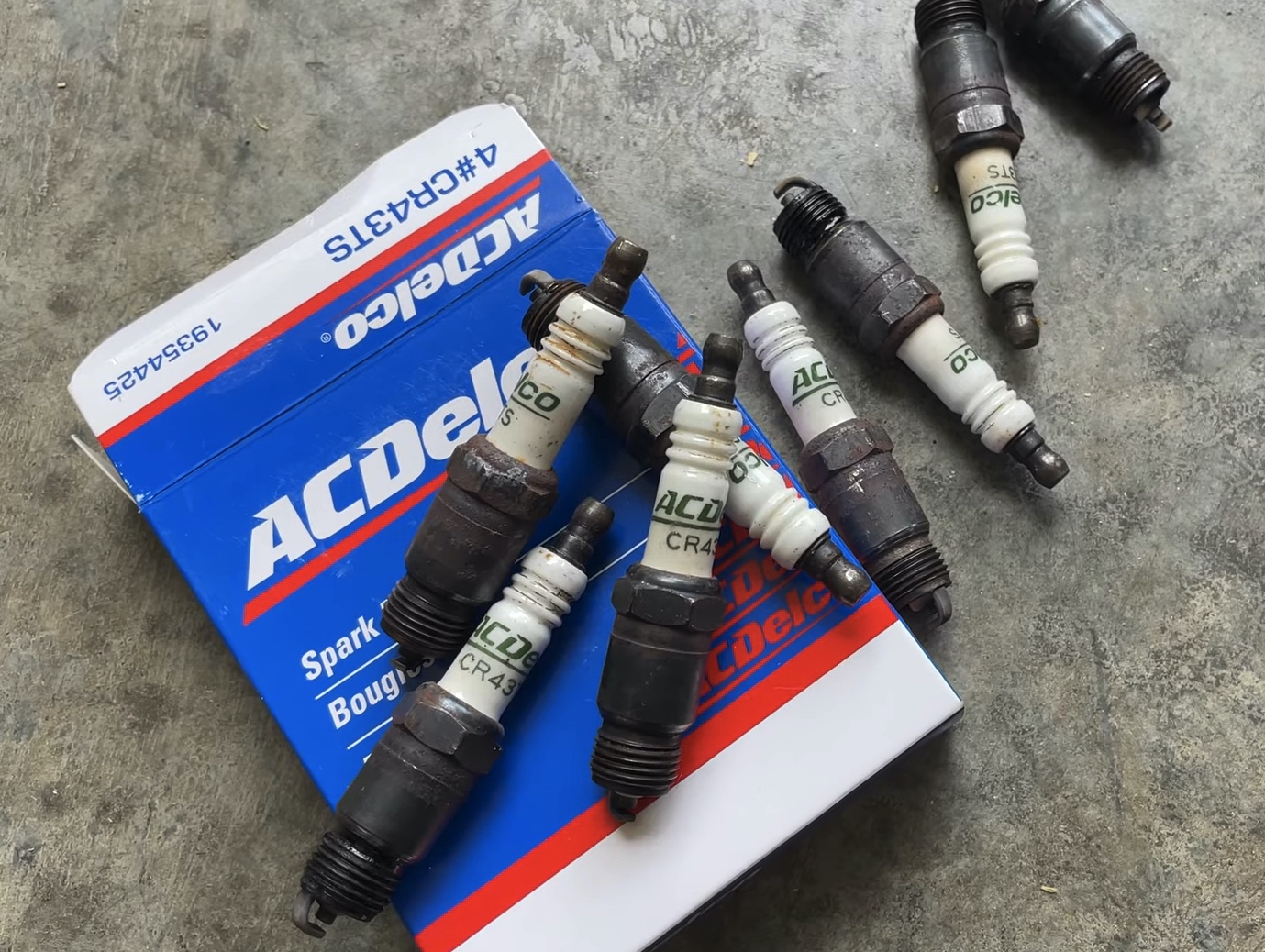
Worn or damaged spark plugs or ignition components can cause inefficient combustion, leading to incomplete fuel burn. Consequently, this can result in misfires, where the air-fuel mixture in one or more cylinders fails to ignite properly. As a result, unburned fuel can pass through the exhaust, causing a gasoline smell and potentially damaging the catalytic converter.
How Faulty Ignition Components Cause Fuel Odors
Worn or Fouled Spark Plugs:
Spark plugs ignite the air-fuel mixture in the combustion chamber. However, over time, spark plugs can become fouled with carbon, oil, or fuel residue, weakening their spark. As a result, this can lead to misfires, which allow unburned fuel to escape through the exhaust.
Failing Ignition Coils:
Ignition coils provide the necessary voltage to create a spark. But, a weak or failing coil can cause misfires or ignition failure in one or more cylinders. Consequently, this results in unburned fuel passing through the exhaust, sometimes accompanied by rough idling and poor acceleration.
Bad Spark Plug Wires or Ignition System Issues:
In distributor-based or coil-on-plug ignition systems, damaged spark plug wires can disrupt spark delivery. Additionally, faulty ignition control modules can lead to incomplete combustion.
Symptoms of Misfires and Ignition Issues
Persistent Fuel Smell –
Unburned gasoline escaping through the exhaust system can create a strong fuel odor, especially when idling or accelerating.
Rough Idling & Hesitation –
A misfiring engine may run unevenly, causing shaking, hesitation, or stalling.
Check Engine Light (CEL) Illuminated –
Misfires often trigger the check engine light with codes like P0300 (random misfire). In the meantime, codes like P0301-P0306 indicate specific cylinder misfires.
Reduced Fuel Efficiency –
If the engine isn’t burning fuel efficiently, it will consume more gasoline, leading to poor mileage.
Excessive Exhaust Smoke or Popping Sounds –
Unburned fuel in the exhaust system can lead to black smoke, strong odors, and even backfiring.
Why Addressing Ignition Issues Is Critical
If left unresolved, misfires and incomplete combustion can lead to:
Catalytic Converter Damage –
Excess unburned fuel can overheat and degrade the catalytic converter, leading to costly repairs.
Increased Emissions –
Poor combustion results in higher hydrocarbon emissions, which can cause emissions test failures.
Engine Performance Issues –
A misfiring engine will struggle with power loss, poor throttle response, and inefficient operation.
If you suspect ignition system issues, it’s best to inspect and replace worn spark plugs, coils, or wires as needed. Moreover, regular maintenance can prevent fuel odors, improve fuel efficiency, and keep your engine running smoothly.
Fuel Spillage
Gasoline spills on your car, hands, or clothing can cause a lingering odor due to gasoline’s volatility. Gasoline evaporates quickly but fumes can linger in fabrics, carpets, or porous surfaces, requiring proper cleaning.
How to Remove Gasoline Odors Effectively
Interior Spills (Seats, Carpets, and Floor Mats)
Blot the Spill Immediately –
Blot up soaked gasoline from fabric or carpeting with paper towels or an absorbent cloth before it seeps deeper.
Use a Specialized Cleaner –
Household cleaners like baking soda, white vinegar, or dish soap mixed with warm water can help break down gasoline residues. Additionally, commercial enzymatic degreasers or upholstery cleaners designed for fuel spills are even more effective.
Sprinkle Baking Soda or Cat Litter –
These absorbent materials help neutralize odors and draw out any remaining moisture. Allow it to settle in for a few hours before vacuuming.
Ventilate the Car –
Keep windows and doors open to allow fresh air circulation, which helps gasoline vapors dissipate faster.
Spilled Gasoline on Hands
Wash with Dish Soap and Baking Soda –
Dish soap cuts through grease, while baking soda neutralizes odors. Scrub thoroughly with warm water.
Use White Vinegar or Lemon Juice –
Soaking your hands in a mixture of vinegar and water (or rubbing with lemon juice) helps break down gasoline residues.
Apply Coffee Grounds or Stainless-Steel Soap –
Rubbing damp coffee grounds or a stainless steel bar on your hands can help neutralize fuel smells.
Gasoline on Clothing
Pre-Treat the Stain –
Soak clothing in a mixture of hot water, baking soda, and dish soap for at least 30 minutes before washing.
Use Heavy-Duty Laundry Detergent –
Wash separately from other clothes with an enzymatic detergent designed to break down oil and grease.
Air Dry –
Never put gasoline-stained clothes in the dryer, as heat can ignite residual fuel vapors. Instead, air-dry them outdoors.
Why It’s Important to Clean Up Gasoline Spills Quickly
Fire Hazard –
Gasoline is highly flammable, and even small vapors can pose a risk if exposed to sparks or flames.
Health Concerns –
Prolonged exposure to gasoline fumes can cause headaches, dizziness, and nausea, especially in confined spaces like a car interior.
Lingering Odors –
Improperly cleaned gasoline smells can persist for days or weeks, making your vehicle uncomfortable to use.
Cleaning spilled fuel promptly with proper methods and ventilation helps eliminate odors and reduce hazards.
Clogged Fuel Filter
A clogged fuel filter can disrupt fuel flow, causing irregular fuel pressure. Consequently, this may lead to leaks, excessive fuel delivery, or incomplete combustion, resulting in a gasoline smell. The fuel filter traps dirt, debris, and contaminants before fuel reaches the engine. As a result, this ensures optimal performance and prevents damage to fuel system components. However, over time, the filter can become clogged, restricting fuel flow and leading to various fuel-related issues.
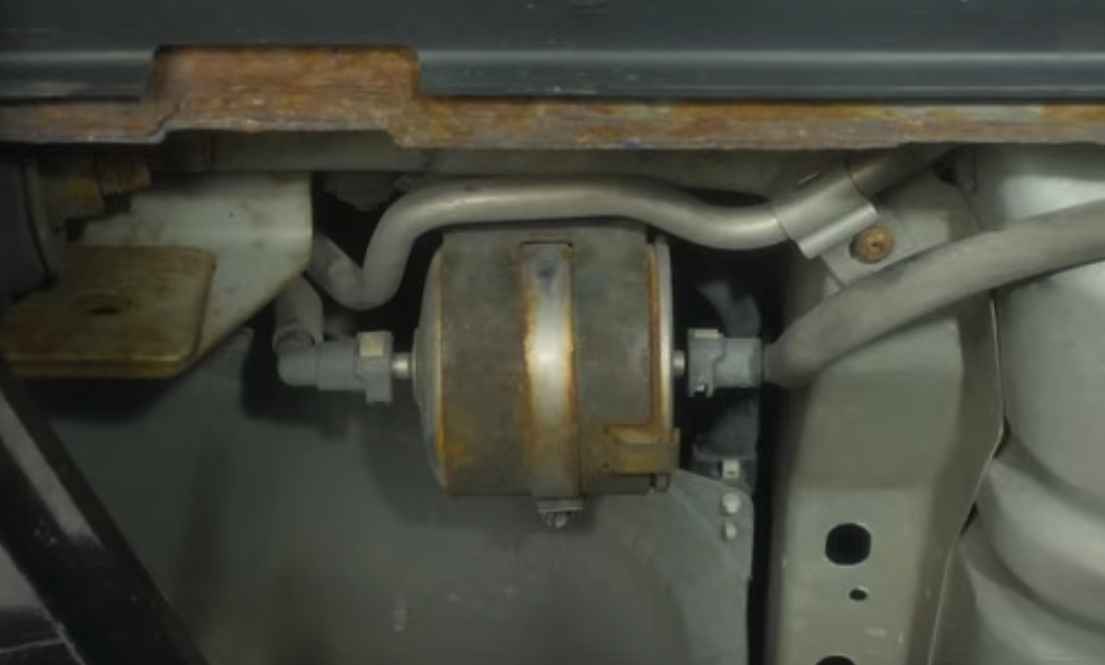
How a Clogged Fuel Filter Can Cause Fuel Odors
Fuel Pressure Buildup and Leaks –
A severely clogged fuel filter can increase fuel pressure upstream, causing excessive stress on the fuel lines, connections, or seals. Consequently, this can cause small fuel leaks around fittings, injectors, or the pump, allowing gasoline fumes to escape.
Overworked Fuel Pump –
The fuel pump must work harder to push fuel through a restricted filter, leading to higher pressure in the system. In some cases, excessive strain on the fuel pump can cause it to leak fuel or fail prematurely.
Excessive Fuel Delivery –
A partially clogged fuel filter can cause irregular fuel pressure, leading to excess fuel reaching the injectors. Consequently, this can result in a rich fuel mixture, contributing to unburned fuel in the exhaust and an associated gasoline odor.
Engine Misfires and Rough Running –
A clogged filter may starve the engine of fuel, leading to misfires, poor acceleration, and rough idling. As a result, unburned fuel from misfiring cylinders can pass through the exhaust system, creating a strong fuel smell.
Signs of a Clogged or Failing Fuel Filter
Difficulty Starting the Engine –
Restricted fuel flow can make it harder for the engine to start, especially in cold conditions.
Engine Stalling or Hesitation –
A clogged filter can cause inconsistent fuel delivery, leading to stalling or hesitation, especially under load or acceleration.
Reduced Fuel Efficiency –
If the engine doesn’t receive efficient fuel delivery, it may consume more fuel, reducing mileage.
Check Engine Light –
A clogged fuel filter can trigger a lean mixture or fuel pressure codes, illuminating the check engine light.
Whining Noise from the Fuel Pump –
An overworked fuel pump struggling to push fuel through a clogged filter may produce a high-pitched whining or humming sound.
Why You Should Promptly Replace a Clogged Fuel Filter
Ignoring a clogged fuel filter can cause system damage, increased emissions, poor performance, and fuel leaks, creating a fire hazard. Manufacturers recommend replacing the fuel filter every 20,000 to 60,000 miles, depending on the vehicle and fuel quality. Therefore, if you notice symptoms, inspecting the fuel system and replacing the filter can prevent issues and eliminate odors.
Things to Do If Your Car Smells Like Gas
If you notice a persistent fuel smell, address it quickly to avoid leaks, malfunctions, or hazards. Here are some detailed steps to help identify and resolve the source of the smell:
Check the Gas Cap
– Secure the gas cap tightly, as a loose cap commonly causes fuel smells. Over time, the rubber gasket around the cap can wear out, leading to a poor seal. Screw the cap on tightly until it clicks into place.
– Inspect for cracks or damage. Examine the gas cap for visible cracks, splits, or worn-out seals. A damaged cap allows fuel vapors to escape, creating a smell. Replacing the gas cap with a new one is a quick and inexpensive fix.
– Check the O-ring. The O-ring inside the gas cap may degrade, which can lead to leaks. If the cap is fine but still smells like fuel, replace the O-ring or the entire cap.
Inspect for Leaks
– Look under the vehicle for wet spots or drips. Fuel leaks often appear as wet spots under the car, near the fuel tank, lines, or injectors.
Check for wetness or stains under the car, near the tank or fuel lines.
Pay attention to the fuel lines and connections. Most importantly, look for cracks, splits, or loose fittings that may be allowing fuel to leak.
– Examine the fuel tank: Inspect the tank for rust, dents, or any visible damage that could cause a leak. Corrosion can be a common culprit, especially in older vehicles.
– Check the fuel lines: Over time, fuel lines can become brittle, cracked, or disconnected, allowing fuel to seep out. Ensure they are securely attached and free from visible cracks.
Check for Engine Performance Issues
– Check for rough idling or poor acceleration. If your engine runs rough or stalls at idle, it may indicate an air-fuel mixture issue. Also, clogged filters, failing injectors, or other fuel system malfunctions could cause this. Excess fuel entering the system can produce a fuel smell as it is not burned efficiently.
– Check for difficulty starting. Struggling to start may indicate a malfunctioning fuel pump or fuel filter. Also, an inefficient fuel delivery system may also result in fuel vapors escaping, causing the odor.
– Watch for poor fuel economy. A vehicle consuming more fuel or showing decreased performance may have a fuel system issue. For example, this could involve a faulty fuel pressure regulator or clogged fuel filter.
– Check engine light: A check engine light with fuel system codes (e.g., P0172, P0455) may indicate issues. For instance, these could involve fuel injectors, pressure regulators, or evaporative emissions components, causing fuel odors.
Get a Professional Inspection
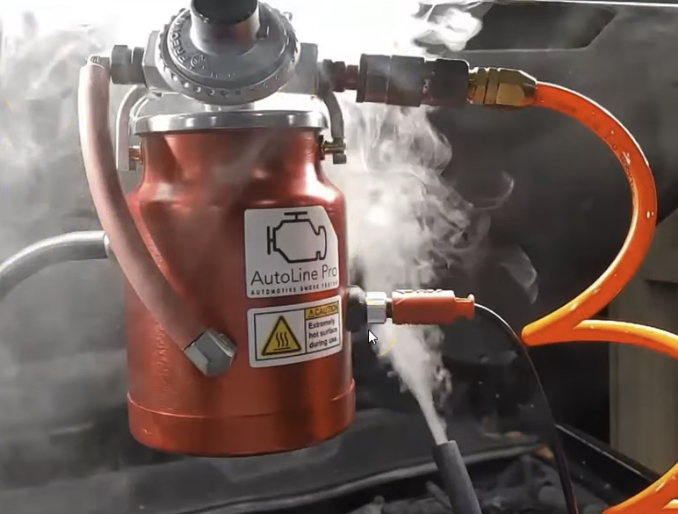
– If you can’t find the source after checking the gas cap and inspecting for leaks, it’s best to have our professional team inspect the vehicle. Engine performance issues could be a sign of a deeper problem.
We’ll use diagnostic tools to check fuel pressure, inspect injectors, and identify issues with the EVAP, sensors, or tank.
Also, we may use a smoke machine to detect hidden leaks in the fuel or EVAP system.
– Addressing the issue promptly: Unchecked fuel leaks or faulty systems can cause engine damage, fire hazards, or increased emissions. So, our trusted team will inspect and repair the problem. We’ll resolve the problem safely and effectively.
These steps help identify the gasoline smell source, preventing further damage and ensuring safer, more efficient driving.
Do not ignore a gasoline smell around your car, as it signals a serious safety risk, like a fuel leak. Addressing the issue promptly not only ensures your safety but also helps prevent costly repairs down the line. If you’re experiencing a gasoline odor in your vehicle, it’s crucial to have it checked out as soon as possible.
At Temecula Auto Repair & Transmission, we specialize in fuel system and leak repairs, providing expert diagnostics to identify the cause. We fix clogged fuel filters, damaged fuel lines, and faulty injectors. Our experienced team has the knowledge and tools to restore your vehicle safely.
We’ve proudly served the communities of Temecula, Murrieta, Winchester, and French Valley for over ten years. We provide reliable, top-quality automotive repair services to local drivers. If you need a professional inspection and repair, don’t hesitate to contact Temecula Auto Repair & Transmission today. We’re here to ensure your vehicle runs safely and efficiently!
Frequently Asked Questions
Is it safe to drive my car if it smells like gas?
Usually no. A gas smell often means a fuel leak, which is a fire risk. If it’s strong or you see fluid under the car, stop driving and have it inspected right away.
What are the most common causes of a gas smell?
A loose or worn gas cap, a leaking fuel injector or fuel line, an aging fuel pressure regulator, or an EVAP (charcoal canister) issue. A smoke test pinpoints it quickly.
Will a gas smell trigger my check engine light?
Often yes. EVAP leaks that cause a fuel odor frequently set the check engine light, so a diagnostic scan is a smart first step.
Why does my car smell like gas when idling?
An idle-only gas smell usually points to a small EVAP leak, a leaking fuel injector, or a vacuum or fuel-line seal that vents fuel vapor when airflow is low. A smoke test isolates it fast.
Can bad spark plugs cause a gas smell?
Yes. Worn or fouled spark plugs cause misfires that leave unburned fuel in the exhaust, producing a raw gas odor along with rough idle and a check engine light.
