
Noticed a puddle or fluid leaking under your car? It could be harmless Air Conditioning condensation or a warning of a more serious problem involving your Engine, Transmission, Cooling System, Power Steering, or Brakes. Common automotive leaks include Engine Oil, Coolant, Transmission Fluid, Brake Fluid, Power Steering Fluid, and Fuel. While the fluid’s color, consistency, and location can offer important clues, color alone cannot reliably identify the source. If you suspect a Brake Fluid or Fuel leak, notice Engine overheating, or see a low Oil Pressure warning, stop driving immediately and arrange for professional assistance.
What Is Leaking Under Your Car? Fluid Color Identification Guide
The color, consistency, smell, and location of a puddle can help identify what is leaking from your vehicle. Use this guide to recognize common automotive fluids, understand potential problems, and determine what action to take.
Important: Fluid color alone cannot positively identify a leak. Different manufacturers use different fluid formulations, and age, contamination, and temperature can change a fluid’s appearance. Additionally, leaking fluids may travel along Engine components, protective shields, or the vehicle’s undercarriage before reaching the ground. A professional inspection and appropriate diagnostic testing can identify the actual source and determine whether repairs are required.
Common Car Fluid Leaks: Colors, Causes & Warning Signs
Clear Water Under Your Car: Usually A/C Condensation
Noticed clear water dripping beneath your car, especially near the front passenger side? In many cases, it’s simply condensation from the Air Conditioning (A/C) System. When your A/C operates, it removes moisture from the air, which drains underneath the vehicle. This is especially common during hot Temecula summers.
Normal A/C condensation is clear, watery, and odorless. It may continue dripping for a short time after you park. However, don’t assume every clear puddle is harmless. Some automotive fluids, including Brake Fluid and certain Coolants, can also appear nearly clear.
What to do: If the liquid is clearly water associated with A/C operation, there’s generally nothing to worry about. If you’re uncertain about its source, notice an unusual odor, or see the puddle when the A/C hasn’t been operating, have it checked.
Brown or Black Fluid Under Your Car: Possible Engine Oil Leak
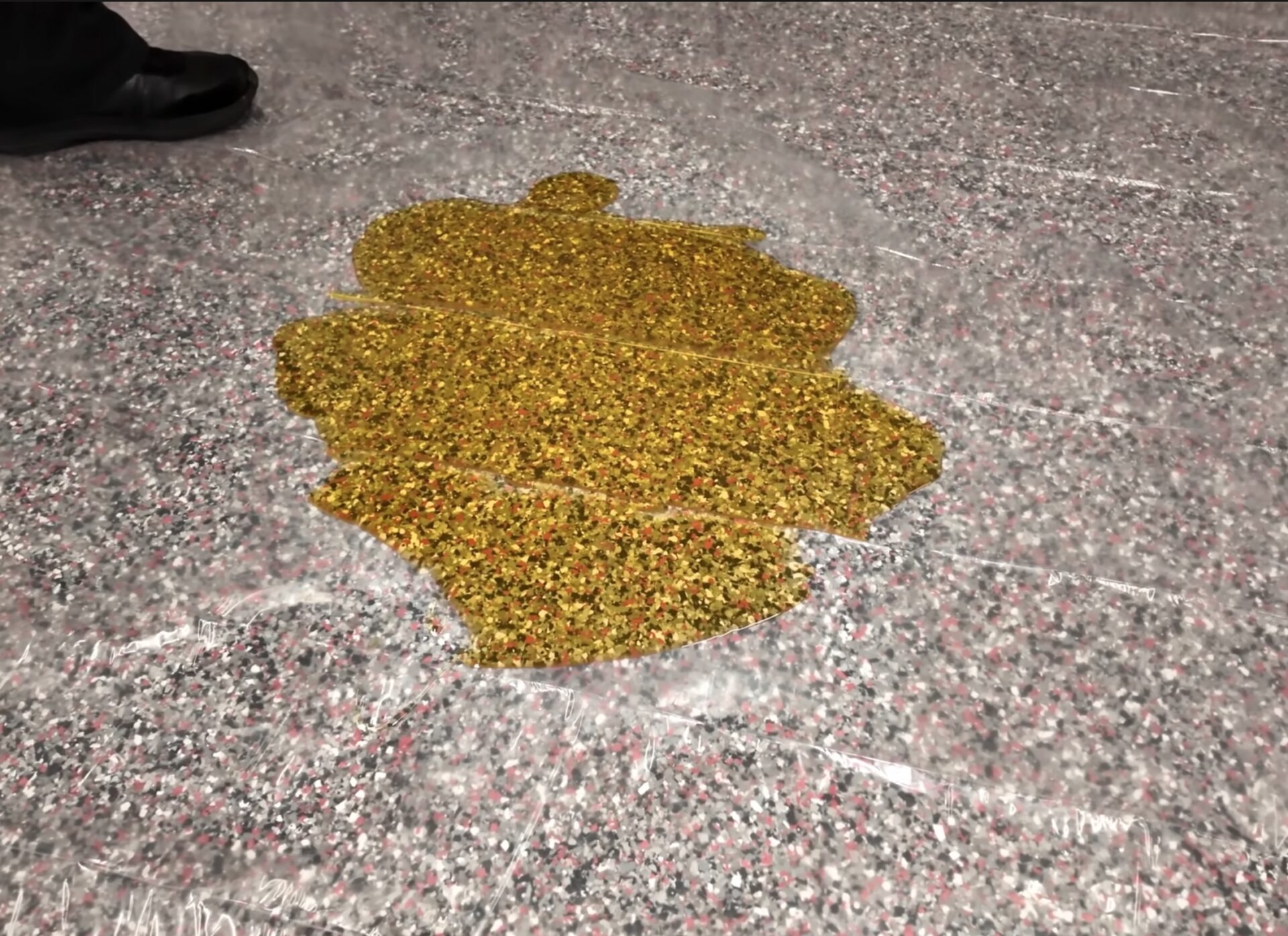
Engine Oil typically ranges from light amber when fresh to dark brown or black as it ages and accumulates contaminants. However, color alone doesn’t determine the Oil’s condition or confirm that a dark puddle is Engine Oil. Other automotive fluids, including aged Transmission Fluid, can also turn brown or nearly black.
Engine Oil leaks commonly develop around Valve Cover Gaskets, Oil Pan Gaskets, Crankshaft Seals, Oil Filter Housings, and other Engine components. Even a small leak can gradually reduce the Engine Oil level, while a more substantial leak can cause rapid Oil loss and serious Engine damage.
Pay attention to how quickly the fluid accumulates. A few drops overnight and a large, spreading puddle represent different levels of urgency, but neither should be ignored.
What to do: Check your Engine Oil level according to the manufacturer’s instructions and arrange an inspection to identify the leak. If the Oil Pressure Warning Light illuminates, stop the Engine as soon as it’s safe. Continuing to operate an Engine with insufficient Oil Pressure can cause severe internal damage.
Green, Orange, Pink, or Blue Fluid: Possible Engine Coolant Leak
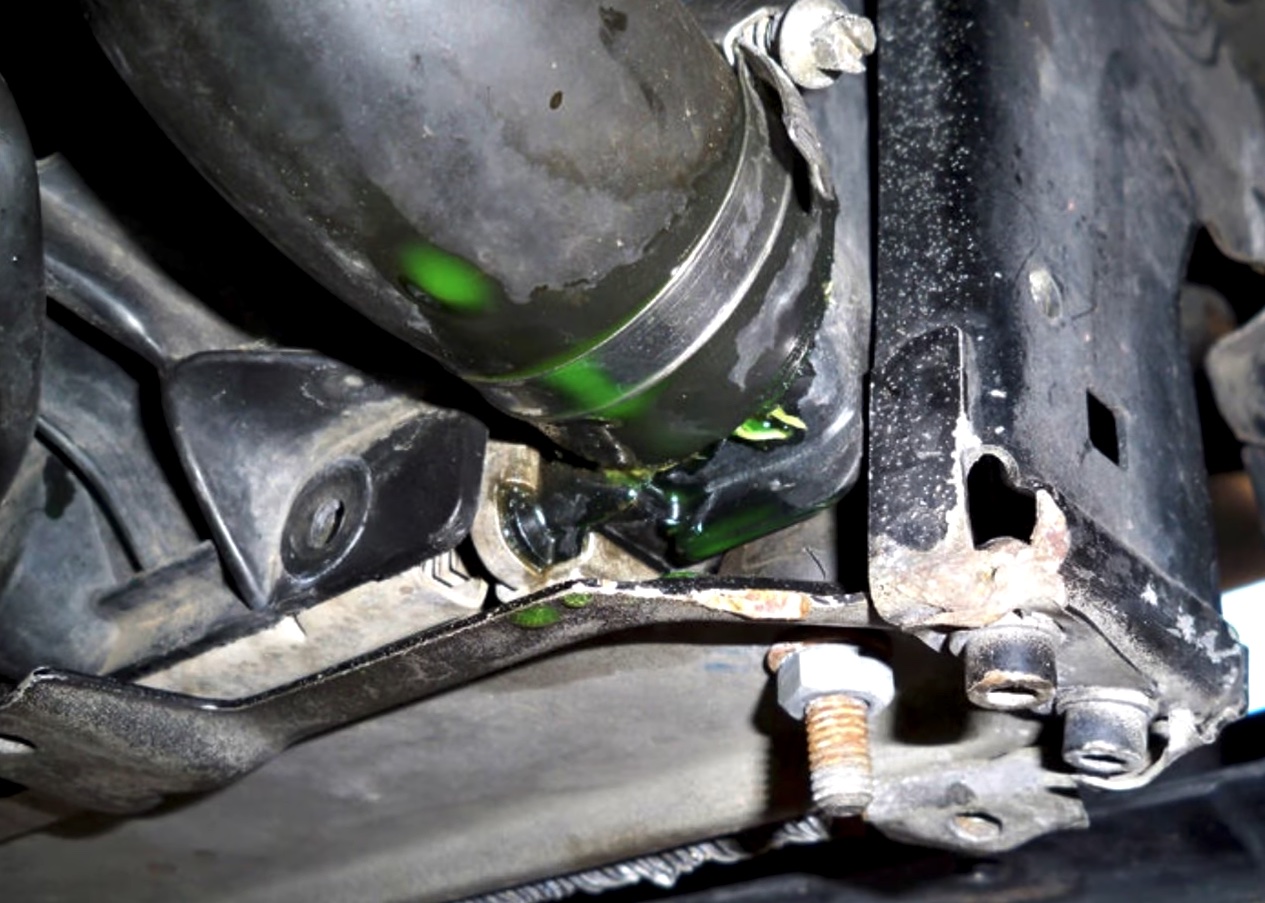
Engine Coolant, also called Antifreeze, comes in several colors, including green, orange, pink, yellow, and blue. Although Coolant often has a slightly sweet odor and watery or slippery consistency, its color does not reliably identify the Coolant formulation or manufacturer. Different Coolants can share the same color, and contamination or aging may alter their appearance.
Coolant leaks can develop from Radiator Hoses, the Water Pump, Radiator, Thermostat Housing, Coolant Reservoir, Heater Core, or other Cooling System components. Some leaks occur only when the Engine reaches operating temperature and the Cooling System builds pressure.
A declining Coolant level may indicate a leak even when you never see a puddle. In some cases, Coolant escapes internally or evaporates from hot Engine surfaces before reaching the ground.
What to do: Check the Coolant Reservoir only when the Engine is cool, following the manufacturer’s instructions. If the level continues dropping, arrange a Cooling System inspection. If the Engine overheats or displays a temperature warning, stop driving immediately. Never remove the Radiator Cap or open a pressurized Cooling System while hot.
Red, Pink, Amber, or Brown Fluid: Possible Transmission Fluid Leak
Transmission Fluid is often red or pink when new, but some manufacturers use amber, blue, green, or other formulations. As Transmission Fluid ages, it may darken to brown. Consequently, a reddish or brown puddle could indicate Transmission Fluid, Power Steering Fluid, or another automotive fluid.
Transmission Fluid leaks may originate from Transmission Seals, Pan Gaskets, Cooler Lines, Fittings, or other Transmission components. Fluid loss can reduce hydraulic pressure, interfere with shifting, and potentially damage internal Transmission components.
Although Transmission Fluid often appears beneath the center or front portion of a vehicle, puddle location alone cannot confirm the source. Fluid can travel along components, crossmembers, and underbody shields before dripping onto the pavement.
What to do: Arrange a Transmission Fluid leak evaluation promptly. If you experience slipping, delayed engagement, unusual shifting, or significant Fluid loss, avoid driving until a Technician evaluates the condition. Operating a Transmission with insufficient Fluid can lead to costly internal damage.
Clear, Amber, Red, or Brown Fluid: Possible Power Steering Fluid Leak
Vehicles equipped with hydraulic Power Steering Systems use fluid to assist steering operation. Depending on the vehicle manufacturer, Power Steering Fluid may be clear, amber, red, or brown. Some systems use Automatic Transmission Fluid, making color an unreliable way to distinguish a Power Steering leak from a Transmission leak.
Common leak sources include Power Steering Hoses, the Power Steering Pump, Reservoir, Steering Rack, and associated Seals or Fittings. Symptoms may include increased steering effort, whining noises while turning, or a declining Power Steering Fluid level.
Power Steering leaks often appear toward the front of the vehicle, but fluid can run along suspension and underbody components before reaching the ground.
It’s also important to recognize that many modern vehicles use Electric Power Steering (EPS) and have no hydraulic Power Steering Fluid to leak.
What to do: If your vehicle has hydraulic Power Steering, have unexplained Fluid loss or steering-related symptoms evaluated. Avoid driving if steering becomes unusually difficult or unpredictable, and arrange towing when necessary.
Clear, Pale Yellow, or Amber Fluid: Possible Brake Fluid Leak
Brake Fluid typically appears clear to pale yellow or amber when fresh, although it can darken with age and contamination. It may feel slippery, but appearance alone cannot distinguish it reliably from other automotive fluids.
Brake Fluid leaks can develop at Brake Lines, Flexible Brake Hoses, Calipers, Wheel Cylinders, the Master Cylinder, or hydraulic connections. Warning signs may include a soft or sinking Brake Pedal, reduced braking performance, a Brake Warning Light, or a declining Brake Fluid level.
Because most automotive Brake Systems rely on hydraulic pressure, losing Brake Fluid can compromise braking ability. Some vehicles may retain partial braking capability when one hydraulic circuit fails, but stopping performance can deteriorate significantly.
What to do: If you suspect a Brake Fluid leak, do not drive the vehicle. Arrange towing and professional Brake System inspection. Adding Brake Fluid without correcting the leak does not resolve the underlying safety concern.
Blue, Green, Pink, or Clear Fluid: Possible Windshield Washer Fluid Leak
Windshield Washer Fluid is commonly blue, but it may also be green, pink, orange, or clear, depending on the product. Its thin, watery consistency can resemble Engine Coolant or ordinary water, so color alone isn’t enough to identify it.
Washer Fluid leaks typically originate from a cracked Washer Reservoir, damaged Hoses, a leaking Washer Pump, or loose connections. You might notice fluid accumulating near a front corner of the vehicle, particularly after filling the Washer Reservoir or operating the windshield washers.
Unlike Engine Coolant or Brake Fluid leaks, a Washer Fluid leak generally doesn’t threaten the vehicle’s mechanical operation. However, losing the ability to clean your windshield can become a visibility and safety concern.
What to do: Check the Washer Fluid level and whether the washers operate properly. Arrange repair if the Reservoir repeatedly empties or the system stops functioning. Don’t assume a blue or green puddle is Washer Fluid without confirming its source.
Clear, Yellowish, or Amber Fluid With a Strong Odor: Possible Fuel Leak
Gasoline is generally clear to pale yellow or amber, while Diesel Fuel may appear clear, yellowish, or slightly darker. Both have distinctive petroleum odors, although their appearance can vary with formulation and contamination.
Fuel leaks may develop from Fuel Lines, Hoses, Injectors, Fuel Rails, Tank Connections, or the Fuel Tank itself. A Fuel leak can occur beneath the Engine compartment, near the middle of the vehicle, or toward the rear, depending on the location of the affected component.
Unlike many other fluid leaks, a suspected Fuel leak presents an immediate fire hazard. Gasoline vapors are especially flammable, and leaking Fuel can ignite if exposed to sparks, flames, or sufficiently hot surfaces.
What to do: Do not start or drive a vehicle with a suspected Fuel leak. Keep ignition sources away, avoid contact with the leaking fluid, and move away from the vehicle if Fuel vapors are strong. Arrange professional towing and Fuel System inspection. If there is an immediate fire danger, contact emergency services.
Why Fluid Color and Puddle Location Don’t Always Identify the Leak
Although fluid color, texture, odor, and puddle location provide useful clues, none can independently confirm the source of an automotive fluid leak.
Fluid color can provide useful clues, but it’s not always a reliable way to identify what’s leaking. As AAA explains in its guide to identifying automotive fluid leaks, different vehicle fluids can share similar colors, making it important to consider other characteristics before drawing conclusions. Ultimately, identifying the actual source requires proper inspection and, when necessary, diagnostic testing.
Different automotive fluids may share similar colors. Additionally, heat, age, contamination, and mixing with dirt or other fluids can change their appearance. A dark brown puddle, for example, might come from the Engine, Transmission, or another lubricated component.
Puddle location can be equally misleading. Fluid often travels along Hoses, Brackets, Crossmembers, Engine components, and protective underbody panels before dripping onto the ground. The spot beneath your parked vehicle may be several feet away from the actual leak.
Some leaks also occur only under specific operating conditions, such as when the Engine is hot, the Cooling System is pressurized, or the vehicle is moving.
The most reliable way to identify a fluid leak is through professional inspection and appropriate diagnostic testing. A Technician can trace the fluid to its actual source, evaluate the severity of the condition, and determine which repairs, if any, are required.
Why Is My Car Leaking Fluid Only When Parked?
A fluid leak may become noticeable only after you park because Oil, Coolant, or other fluids continue to drain from leaking components while the vehicle sits. Some leaks develop during operation, but the fluid collects on protective underbody panels or other components before eventually dripping onto the ground.
Additionally, Engine heat can temporarily increase Cooling System pressure after shutdown, causing certain Coolant leaks to become more noticeable. Even a slow leak can leave a sizable puddle when a vehicle remains parked overnight.
If you repeatedly notice fluid beneath your parked vehicle, don’t assume the leak is minor simply because it isn’t visible while driving. Have the source identified before continued fluid loss leads to additional problems.
Why Is My Car Leaking Fluid After Driving?
Some automotive fluid leaks occur primarily when the vehicle is running because heat, pressure, and moving components affect how fluids circulate through the Engine, Transmission, Cooling System, and other systems.
As operating temperatures rise, Seals and Gaskets expand, fluid viscosity changes, and system pressures increase. These conditions can expose leaks that aren’t apparent when the vehicle is cold or parked. Fluid may also accumulate on underbody components during driving and drip onto the pavement after stopping.
However, not every puddle after driving indicates a problem. Clear, odorless water dripping from the Air Conditioning (A/C) System is generally normal condensation, particularly during hot Temecula weather.
If the fluid appears oily, has an unusual odor or color, or continues accumulating, arrange a professional inspection to determine its source.
How Do Technicians Find the Source of a Fluid Leak?
Finding the source of an automotive fluid leak isn’t always as simple as looking underneath the vehicle. Fluid can travel along Engine components, Hoses, Brackets, and protective underbody panels before dripping onto the ground. Additionally, some leaks occur only when the Engine is running, the vehicle reaches operating temperature, or a particular system operates under pressure.
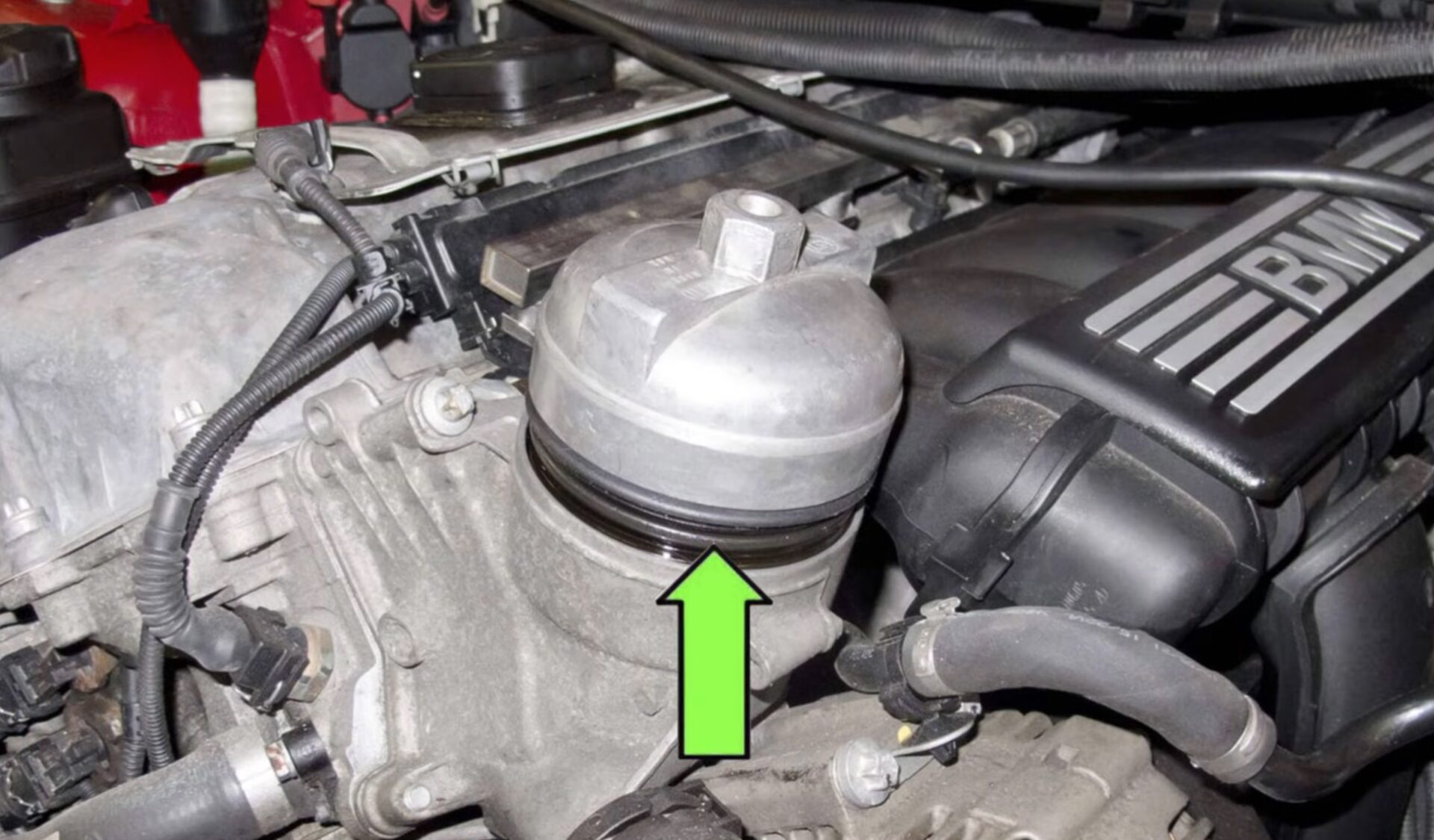
At Temecula Auto Repair & Transmission, our Technicians use a systematic diagnostic approach to identify where the fluid originates, determine the severity of the leak, and recommend the appropriate repairs.
Depending on the vehicle, symptoms, and affected system, our diagnostic process may include:
-
Visual Inspection: Technician examines accessible Engine, Transmission, Cooling System, Steering, Brake, and Fuel System components for signs of active leakage, fluid residue, deteriorated Hoses, damaged Seals, and compromised Gaskets. Technician also inspects surrounding components to trace fluid back toward its source.
-
Fluid Level and Condition Checks: Technician checks applicable fluid levels and examines fluid condition for signs of contamination, deterioration, or abnormal fluid loss. These findings help identify which system may be leaking and whether additional concerns require investigation.
-
Pressure Testing: When appropriate, Technician performs controlled pressure testing of systems such as the Engine Cooling System to identify leaks that may not be visible during a routine inspection. Certain other systems require specialized testing procedures appropriate to their operating pressures and design.
-
UV Dye Leak Detection: For difficult-to-locate leaks, Technician may introduce a compatible fluorescent UV Dye into the affected system. After operating the vehicle under appropriate conditions, Technician uses an ultraviolet inspection light to trace the dye and pinpoint the source of the leak.
-
Cleaning and Re-inspection: When accumulated Oil, Coolant, or other residue obscures the source, Technician may clean the affected area and reinspect the system after running the Engine or performing a controlled Road Test. This helps distinguish an active leak from old fluid residue.
-
Additional Diagnostic Testing: Depending on initial findings, Technician may perform system-specific operational checks, inspect components under normal operating conditions, or recommend further testing and limited disassembly to locate concealed leaks.
Why Identifying the Actual Leak Source Matters
Replacing a component simply because fluid appears beneath it can lead to unnecessary repairs without correcting the problem. For example, Engine Oil dripping from the Oil Pan may actually originate from a Valve Cover Gasket or another component higher on the Engine.
That’s why accurate diagnosis comes before repair recommendations. Once Technician identifies the source and evaluates the condition, we explain the findings, distinguish required repairs from suggested services, and provide an upfront estimate for your consideration and authorization.
Frequently Asked Questions – FAQs
What Is the Most Common Fluid Leaking From Under a Car?
One of the most common liquids found beneath a vehicle is actually water from normal Air Conditioning (A/C) condensation, which generally requires no repair. Among automotive fluids, Engine Oil and Coolant are common sources of leaks, particularly as vehicles age and Seals, Gaskets, and Hoses deteriorate. However, the type of fluid cannot be reliably identified by appearance alone. A professional inspection can determine whether the puddle represents a normal condition or a leak requiring repair.
How Can I Tell if the Puddle Under My Car Is Oil or Coolant?
Engine Oil typically feels greasy or slippery and ranges from amber to dark brown or black. Engine Coolant is generally thinner, may feel slightly slippery, and often appears green, orange, pink, yellow, or blue. Coolant may also have a faintly sweet odor. However, fluid colors overlap, and aging or contamination can change their appearance. Color, consistency, and smell provide clues, but they cannot conclusively identify a leak. Avoid touching or smelling unidentified fluids directly, and have the source professionally evaluated.
Is It Normal for Water to Drip Under My Car When the A/C Is Running?
Yes. Clear, odorless water dripping beneath your vehicle while the Air Conditioning operates, or shortly after you park, is generally normal. The A/C System removes moisture from the air, and that moisture drains underneath the vehicle as condensation. This is especially noticeable during hot or humid weather in Temecula and Murrieta. However, if the liquid has an unusual color, oily texture, or odor, don’t automatically assume it’s harmless condensation.
Can I Drive My Car With a Small Oil Leak?
A minor Engine Oil leak doesn’t always make a vehicle immediately unsafe to drive, but the severity depends on the rate of Oil loss, the Engine Oil level, and where the leak originates. Even a small leak can worsen, potentially causing Engine damage or allowing Oil to contact hot Exhaust components. If the Oil Pressure Warning Light illuminates, stop the Engine as soon as it’s safe. Otherwise, check the Oil level according to the manufacturer’s instructions and arrange prompt diagnosis rather than allowing the leak to continue.
How Do Mechanics Find a Fluid Leak That Only Happens While Driving?
When a fluid leak occurs only while driving, a Technician may inspect the affected system for signs of leakage, check Fluid levels, and reproduce the conditions under which the leak develops. Depending on the system, testing may include a controlled Road Test, pressure testing, or UV Dye leak detection. Heat, vibration, and operating pressure can expose leaks that remain hidden while the vehicle is parked. The goal is to identify the actual source of the leak before recommending repairs, rather than replacing components based solely on where fluid appears beneath the vehicle.
Fluid Leak Diagnosis and Repair in Temecula and Murrieta
Whether you’ve noticed a few drops of Oil on your driveway, a growing puddle of Coolant, or an unexplained fluid leak beneath your vehicle, Temecula Auto Repair & Transmission can help identify the cause.
We serve drivers throughout Temecula, Murrieta, Winchester, French Valley, and surrounding communities, providing professional diagnostic testing and automotive repairs for most makes and models.
Don’t wait for a small fluid leak to become an expensive repair. Identifying the source early can help prevent additional damage and unexpected breakdowns.
Call (951) 699-3332 or reserve your Fluid Leak Testing & Evaluation today.
Temecula Auto Repair & Transmission
27415 Jefferson Avenue
Temecula, CA 92590
