


Protect Your Vehicle: Catalytic Converter Theft Prevention in Temecula and Murrieta
Reported thefts of catalytic converters increased progressively each year from an average of 108 catalytic converter thefts per month in 2018 to 1,203 average thefts per month in 2020. This is according to the National Insurance Crime Bureau (NICB). The number of stolen catalytic converters continued to increase in 2021 and 2022. In this post, we’ll discuss Catalytic Converter Theft Prevention measures you can take to avoid becoming a victim.
The Top States for Catalytic Converter Thefts
The top five states for catalytic converter thefts were California, Texas, Minnesota, North Carolina, and Illinois. KTLA 5 News recently reported that, in the first six months of 2023, California topped the list of total catalytic converters stolen, with more than 5,400 claims filed for a total payout of about $17.8M.

Is Your Car A Target?
Thieves tend to mostly target vehicles with ultra-low emissions. This is because these cars have catalytic converters that contain more of the valuable rhodium, palladium, and platinum.
They also tend to go after trucks and SUVs because it’s easy to slide under those vehicles. Typically, these thieves just hack the cat converters off at the exhaust pipes with a portable electric saw rather than taking time to unbolt the converters.
Why Installing Catalytic Converter Cages or Shields Can Be Effective in Catalytic Converter Theft Prevention
To combat catalytic converter theft, many experts recommend installing catalytic converter cages. These security measures can make a significant difference. Here’s how installing catalytic converter cages can protect your vehicle:
- Fluorescent Paint: Painting your catalytic converter with high-temperature fluorescent paint can act as a deterrent. It may render the stolen converter less valuable to thieves.
- VIN Etching: Etching your Vehicle Identification Number (VIN) into the catalytic converter can help trace it back to your vehicle, potentially deterring thieves.
- Comprehensive Insurance: Ensuring you have comprehensive insurance coverage that includes protection against stolen auto parts can provide financial security if a theft occurs.
While these measures are helpful, they are reactive rather than preventive. However, installing catalytic converter cages is a proactive approach that can significantly reduce the likelihood of theft.
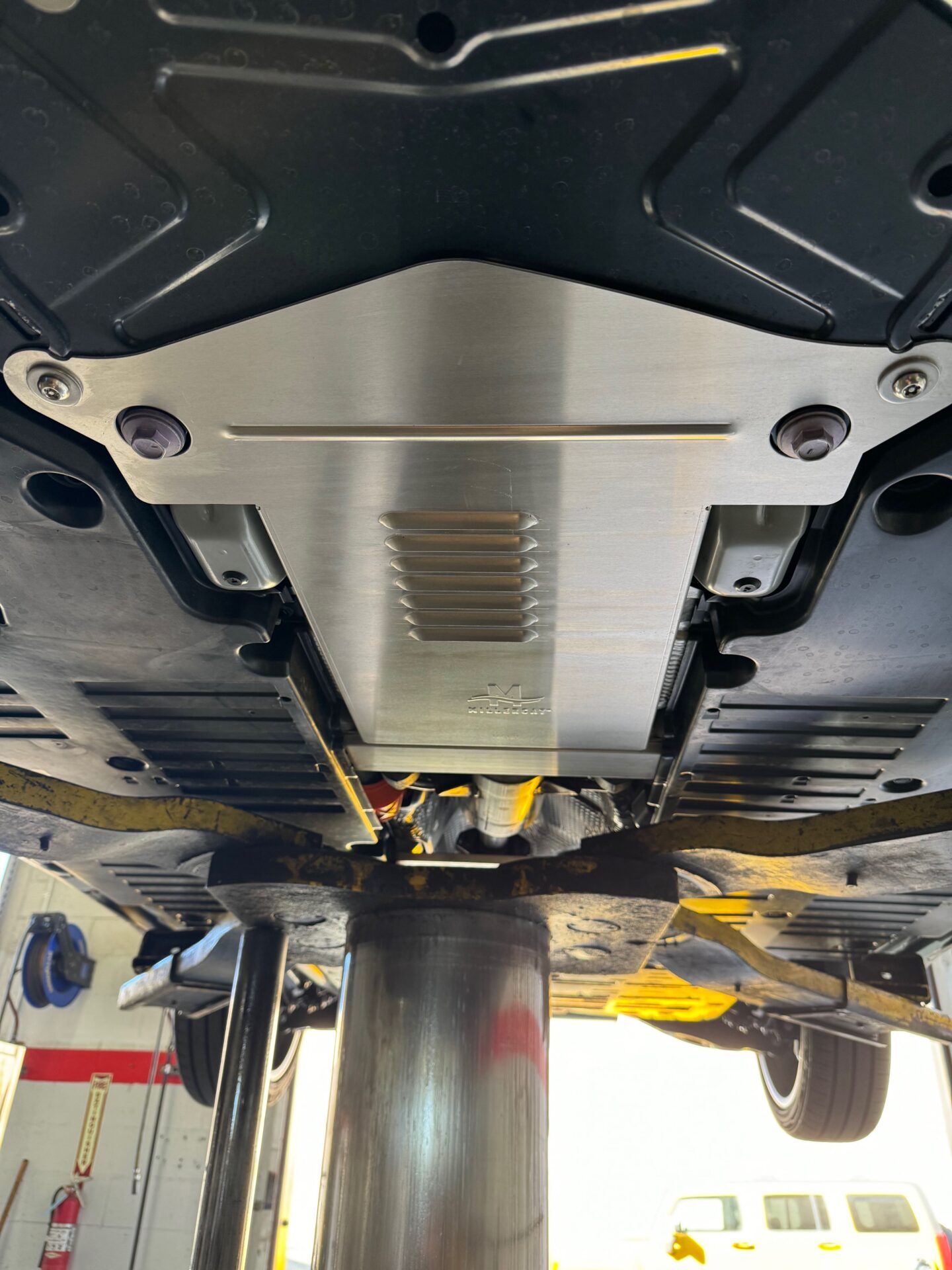
The Benefits of Installing Catalytic Converter Cages or Shields
Installing catalytic converter cages provides a physical barrier that can deter thieves. Although no security device is entirely foolproof, a well-installed cage can make your vehicle less attractive to opportunistic criminals. Think of it like this: a locked bike is far less appealing to a thief than an unlocked one.
At Temecula Auto Repair & Transmission, we offer a range of options for securing your catalytic converter. Our solutions include CatClamps, CatStraps, and CatCages. Additionally, we can custom-fabricate and weld a protective cage for vehicles with unique needs. If you’re searching for “installing catalytic converter cages near me,” look no further!
Our installations are done carefully to avoid any damage to the catalytic converter or its identifying information. Most importantly, we ensure that all vital information remains visible and do not weld directly onto the catalytic converter, as this could lead to complications during emissions testing.
So, Why Are Catalytic Converters A Target For Theft?
Most car owners probably know that there’s a part within their vehicle called the catalytic converter, sometimes called “cat converter” for short. You may know that the catalytic converter processes the emissions in your engine. But that’s probably about it. Most drivers aren’t really familiar with the ins and outs of how a catalytic converter works. Let’s dive in…
What Exactly is a Catalytic Converter?
Before getting into what a catalytic converter is, let’s talk about automobile emissions.
There are three types of harmful compounds within your engine’s exhaust that the catalytic converter deals with. Those three compounds are:
- Carbon Monoxide: Carbon Monoxide is created when gasoline is combusted to power the engine.
- Hydrocarbons: Not all gasoline ends up being combusted, and unburnt gasoline expels hydrocarbons.
- Nitrogen Oxides: Nitrogen is naturally present in the air. As the engine heats up, nitrogen in the air combines with oxygen to produce nitrogen oxides.
All of these compounds are harmful. Hydrocarbons and nitrogen oxides contribute to smog and acid rain. Carbon monoxide is poisonous to humans (as well as animals). As such, we’re strongly incentivized to limit cars from putting too much of those compounds out into the air.
Enter the catalytic converter. The catalytic converter is a device mounted into the exhaust system. It consists of three subsystems.
The Substrate
The substrate is the outer structure of the catalytic converter. The core of a catalytic converter is made of ceramic material. It forms a square honeycomb structure. The substrate is built so that the surface area is maximized. Exhaust will flow through the substrate as the engine runs.
The Washcoat
The washcoat acts as a carrier for the catalyst. This is the last part of the catalytic converter. The washcoat is designed to further maximize the surface area within the core of the catalytic converter. It creates an irregular, uneven surface within the substrate. This means that exhaust passing through the catalytic converter is exposed to more of the catalyst.
The Catalyst
Finally, we come to the catalyst itself. The catalyst is the substance that converts the three harmful compounds into less toxic ones. Precious metals are used to make the “catalyst” inside the catalytic converter. The three precious metals most often used in a catalytic converter are platinum, palladium, and rhodium. These precious, and expensive, metals are what thieves are after when stealing catalytic converters.

The catalyst converts carbon monoxide into carbon dioxide, the same compound we exhale as we breathe. It converts hydrocarbons into carbon dioxide and water. And it converts nitrogen oxide into nitrogen and water.
The Important Role of a Catalytic Converter
It’s important to know that a properly functioning catalytic converter is essential for passing any emissions test. The State of California requires most vehicles to pass an emissions test every two years. Similar statutes exist in most other states. If a vehicle fails its emissions test it will not be legal to drive.
As a result, keeping your catalytic converter in good shape is important if you want to keep your car street legal.
Catalytic Converter Replacement
If your catalytic converter has been stolen, obviously, a replacement is now necessary. But theft is not the only possible demise of your catalytic converter. There are instances where a catalytic converter can be damaged or may go bad. This leads to the same expensive end result of having to replace it.
Knowing a little bit more about the catalytic converter can potentially save you money down the line. Replacing a catalytic converter is one of the more expensive repairs on cars these days. You can usually take steps to avoid reaching the point of having to replace it. Having knowledge of how a catalytic converter works and the signs of an at-risk or failing catalytic converter might be the difference between a $1,000 plus repair bill or not. Commonly, $1,000 to $3,000 is what one will have to pay for a catalytic converter replacement. Some specialty converters even exceed that price.
What are the Signs of a Bad Catalytic Converter?
There can be a variety of signs that your catalytic converter is failing or is not functional. The first, as mentioned previously, is a failed emissions test. This may be your first warning sign that something is wrong with your catalytic converter. However, there are a handful of other signs that can alert you before that point . Here are some of the common warning signs:
- Check Engine Light: There are a number of reasons why the check engine light might illuminate on your vehicle’s dashboard. A bad catalytic converter is one of them. If you see this light come on, bring your car to us as soon as possible so that we can figure out what is going on and avoid further damage.
- Rattling Noise: If you hear a rattling noise as your car idles, this could be a sign that your catalytic converter is going bad.
- Decreased Fuel Efficiency: If you notice that your gas mileage is going down, this is another possible sign of a bad catalytic converter.
- Reduced Engine Performance: If your car seems like it’s struggling or has lost some power when you press the gas pedal, the catalytic converter might be the culprit.
Other Potential Problems
Engine problems that result in excessive exhaust temperatures or unburned fuel can damage the catalytic converter. Regular maintenance of your vehicle’s engine is crucial to prevent such issues.
For those interested in installing catalytic converter cages to protect their vehicles, Temecula Auto Repair & Transmission is here to help. Our team provides expert installation services to safeguard your catalytic converter against theft. Contact us today or click here to schedule an appointment and ensure your vehicle remains secure.
You should also check out Catalytic Converter Replacement.
