Hassle-Free Power Steering Repair Services in Temecula and Murrieta: Trust Our Skilled Technicians for Reliable Auto Care
If you’ve ever driven a vehicle without power steering, then you probably can appreciate just how much power steering assists you in handling your car. This is especially true at slow speeds like when parking the car. Your car’s power steering uses a hydraulic system to amplify the small effort you put into the turning of the steering wheel so that a relatively light turn of the steering wheel is able to easily turn your car’s wheels.
The power steering system is responsible for converting a gentle force into a strong force. This means that the system itself is usually under a great deal of stress. Additionally, any hydraulic system – such as the power steering system in your car – is highly pressurized. This requires our technicians to ensure the power steering fluid is at the full level and in good/clean condition in order for the system to function at optimum performance. Periodically, the power steering system can require maintenance, especially if it’s been neglected for long periods of time. To have a better idea of how to take care of your power steering, it’s helpful to have some understanding of how it works.
Power Steering Basics
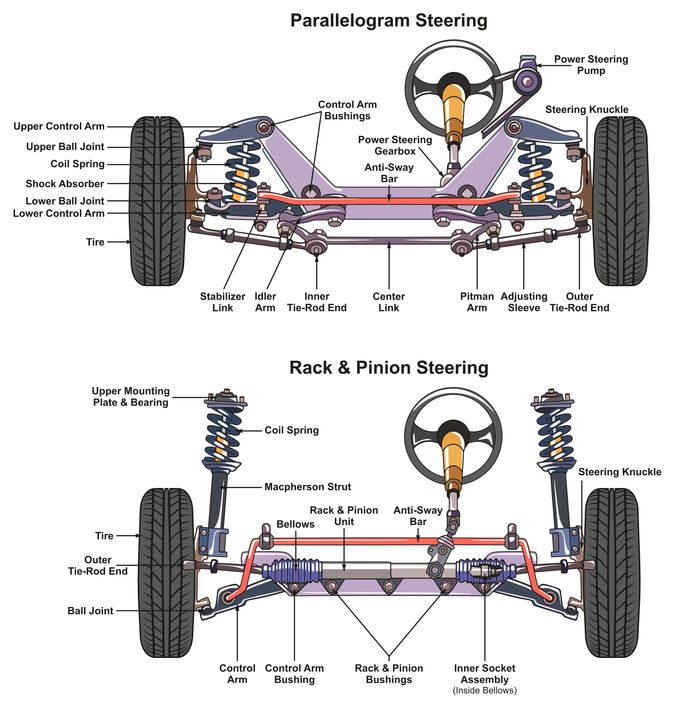
Before being able to understand how power steering works, it’s necessary to understand the basics of how a vehicle’s steering system in general works. The basic principle of a car’s steering system is the rack and pinion.
Rack and Pinion Steering System
Let’s start with the car’s steering wheel. The steering wheel connects to a steering shaft. The shaft descends down toward the front axle. At the other end of the steering shaft is a circular gear. This gear is called the “pinion.” The pinion interlocks with the rack. The rack is a straight gear that connects to the steering arms of your car’s wheels through tie rods.
When you turn the wheel, this causes the pinion to rotate. This in turn causes the rack to move either left or right. The right or left movement pulls the wheels in the appropriate direction. Basically, the rack and pinion converts the turning force of the steering wheel into a side-to-side force causing the wheels to turn.
However, without power steering, operating a rack and pinion steering system requires a great deal of force and strength. The hydraulic system assists in the turning process and makes steering easy and controllable for the driver.
Hydraulic Power Steering
The addition of power steering means a slight modification of the rack and pinion setup. In a power steering setup, part of the rack is now a hydraulic piston and cylinder. The rack connects to the piston. The cylinder connects on both sides by fluid lines (typically metal or special rubber hoses).
The power steering pump feeds pressurized power steering fluid through either of the sides of the cylinder. This pressurized fluid causes the piston to move in the opposite direction of the fluid. The fluid then cycles back into its reservoir. The pressurized hydraulic fluid is the key to the force multiplier effect. Making a slight turn of the wheel result in significant power to the wheels when pushing the piston to move the rack; and, in turn, the wheels.
Another key component of a power steering system is the power steering pump. The pump is responsible for pressurizing the power steering fluid before delivering it to the cylinder in the rack and pinion unit. The power steering reservoir stores the power steering fluid in depressurized form and supplies it to the pump. Only when needed does the power steering pump pressurize the fluid and deliver it to assist in steering.
There are some further modern-day details to certain vehicles’ power steering systems. These details include the assistance of electronics in addition to the hydraulic system and some sensors that monitor the whole process. But the basic components are the steering shaft, the rack and pinion, the piston and cylinder driving the rack internally, and the pump supplying pressurized power steering fluid. If you understand that chain of components, you understand the basics of power steering.
Electric Power Steering
Vehicle manufacturers are equipping more and more cars with Electrically-assisted Power Steering. The advantage of electric power steering is the driver will have power assist even if the engine is not running. Other advantages include the ability for vehicle manufacturers to program the system to provide variable assist, depending on the driving situation. For example: more assist while parking and less assist at higher speeds.
Electric Power Steering (EPS) uses an electric motor to provide power steering on demand. This actually leads to more economical operation of the vehicle’s engine. In a hydraulic power steering system, the power steering pump is running (always on, so to speak) regardless of whether or not power steering – or steering at all – is needed. Whereas EPS is only activated when the driver turns the wheel.
In an Electric Power Steering system, there is an electric motor mounted to either the steering rack or on the steering column. Additionally, there are electronic sensors somewhere at the steering wheel. When the driver turns the steering wheel, the sensors pick up the input from the driver. The sensors then send a signal to a control unit (computer). The control unit in turn applies torque via the electric motor to assist in turning.
Technical Advancements
There are great advancements these days in assistive technology for vehicles. Think parking assist devices, automatic braking and other collision avoidance technology, and ultimately autonomous cars. Electric Power Steering is actually a stepping-stone to that technology for steering and vehicle direction control. We’re bound to see a much wider use of Electric Power Steering in many more models going forward.
| We want to thank John Weinhoeft, from our Facebook community, for suggesting that we include this discussion about Electric Power Steering. We agree that no write-up on power steering these days should be without some mention of Electric Power Steering. Thanks, John, for the input. |
Common Power Steering Issues
Any time you take a highly pressurized system responsible for generating hundreds of pounds of force, it stands to reason that this system will be under stress. There are a few common ways in which the power steering system can wear out or break down.
Power Steering Fluid Leak
The power steering system is completely dependent on the hydraulic fluid. If there isn’t enough fluid or the fluid has been compromised, you’ll run into problems. A common issue with the power steering system is a power steering fluid leak.
This can happen at any point in the chain of components. The cylinder of the rack and pinion unit can develop a crack or leak from either the cylinder itself or more commonly from the steering rack seals, the fluid lines may develop cracks or holes that leak power steering fluid, or the pump can spring a leak. All of these failures occur due to wear and tear and stress from the high pressure of the fluid.
If your power steering system develops a leak, it’s a matter of time before your fluid levels drop to the point where your power steering either begins to be less effective or even fails entirely. You definitely don’t want to let it get to that point. If you detect any evidence of your power steering fluid leaking, you’ll want to bring your vehicle in for service as soon as possible. Signs of a leak include the sight of fluid beneath your car, a noise from under the hood particularly while turning, or a decrease in the effectiveness of your power steering.
Contaminated Power Steering Fluid
In comparison to something like your car’s engine oil, power steering fluid remains relatively clean over time. The process isn’t as messy as the combustion of fuel in the engine or other systems that dirty up their respective fluid quicker. However, as time goes on the power steering fluid does in fact begin to accumulate debris. This chiefly comes from micro bits of plastic or metals worn from the inside of the system.
Other than maybe a screen within a particular component, a power steering system has no main filter for the fluid, meaning that debris builds up within the fluid and is never removed unless it’s flushed out manually. If the power steering fluid becomes too contaminated, it will begin to wear away at the inside of the power steering system and do damage to the fluid lines, pump and cylinder.
A power steering flush removes all the old fluid from the system and clears out any accumulated grime and debris. Our then fills the system with brand new fluid up to optimum levels. Many manufacturers recommend getting a power steering flush at regular intervals. If it’s been a while, consult your user manual or bring your car in to us for a power steering flush.
Keep up with Power Steering Fluid maintenance and earn rewards along the way. Power Steering Fluid Exchange qualifies for our Auto Care Rewards Program.
Problems with the Power Steering Pump
Your car’s engine powers the steering pump. A belt runs from the crankshaft to the power steering pump. Over time that belt can wear out, crack, and eventually break. If the power steering belt breaks, your power steering will not function. Part of a car’s routine maintenance should be inspecting the belt for signs of wear to determine whether it needs replacement. Our Certified Automotive Experts inspect all belts during routine vehicle maintenance.
Another common issue is the power steering pump itself going bad. If the pump starts to wear out, it won’t be as effective in pressurizing the fluid, and your power steering effectiveness will suffer. You may be able to detect the power steering pump failing if you hear noises while it’s working. Pump noises typically occur while you’re turning the steering wheel.

Power Steering Rack Failure
The power steering rack is in a lot of ways the heart of your power steering system. If the power steering rack breaks down, it’s even more dangerous than many of the other previously discussed issues. A failed steering rack may compromise your ability to handle the car at all.
There are a few clues that your power steering rack may be on the verge of failure. If your steering wheel feels unusually tight, this is a potential sign. Another is grinding or other metallic noises when you turn the wheel. A very common precursor to power steering rack failure is fluid leaking from the rack. If you’re noticing signs along these lines, it’s a good idea to bring your vehicle in to us for service sooner rather than later.
Top-Notch Power Steering Repair & Maintenance in Temecula, Murrieta, Winchester, and French Valley
If you’re experiencing any issues with your power steering system or would just like a routine preventative inspection of your system, give us a call today or click here to make a reservation. We are the power steering experts for Temecula, Murrieta, Winchester, and French Valley.
You may also be interested in reading…
Suspension and Steering
Shocks and Struts
Tires
Why Does My Car Shake When I Brake?